Winter Storm Preparedness: How to Get Your Household Ready
Prepare for a winter storm by stocking supplies before the watch, heating your home safely, protecting pipes, keeping a car kit and planning for days without power.
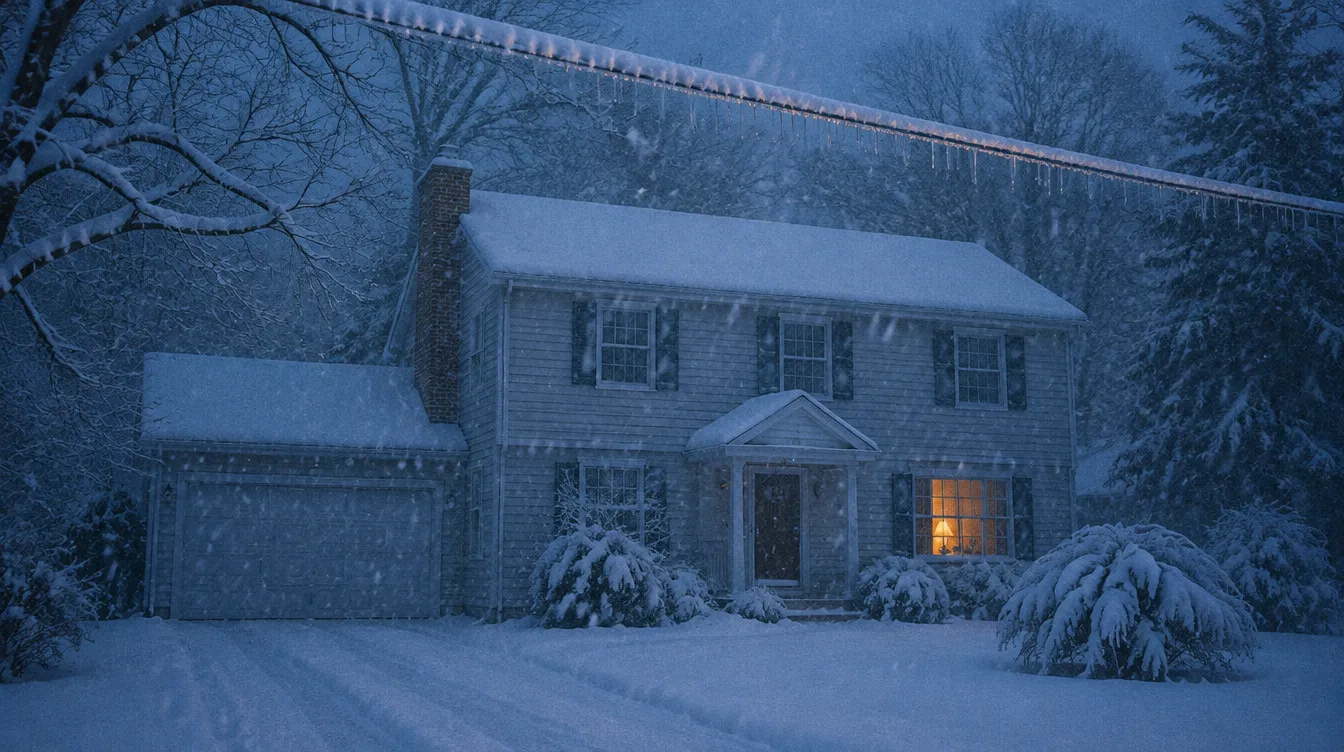
Winter storm preparedness comes down to four things: get supplies in before the storm, keep your home warm without creating a fire or carbon monoxide risk, protect your pipes and car, and plan for several days without power or safe roads. Most of the work happens before the first flake falls, when stores are open and roads are clear.
This guide walks through what to do before, during and after a winter storm, with extra notes for older adults, kids and pets. Always follow instructions from your local officials first. They know your roads, shelters and warming centers better than any national guide.
Know the alerts: watch vs warning
The National Weather Service uses three main winter alerts. Knowing the difference tells you how much time you have.
| Alert | What it means | What to do |
|---|---|---|
| Winter Weather Advisory | Snow, sleet or freezing rain that will cause significant inconvenience and can become dangerous without caution | Slow down, plan extra travel time |
| Winter Storm Watch | A blizzard, heavy snow, heavy freezing rain or heavy sleet is possible, usually 12 to 48 hours out | Finish shopping, fuel up, charge devices |
| Winter Storm Warning | Hazardous winter weather is imminent or occurring, usually issued 12 to 24 hours ahead | Stay home and off the roads if you can |
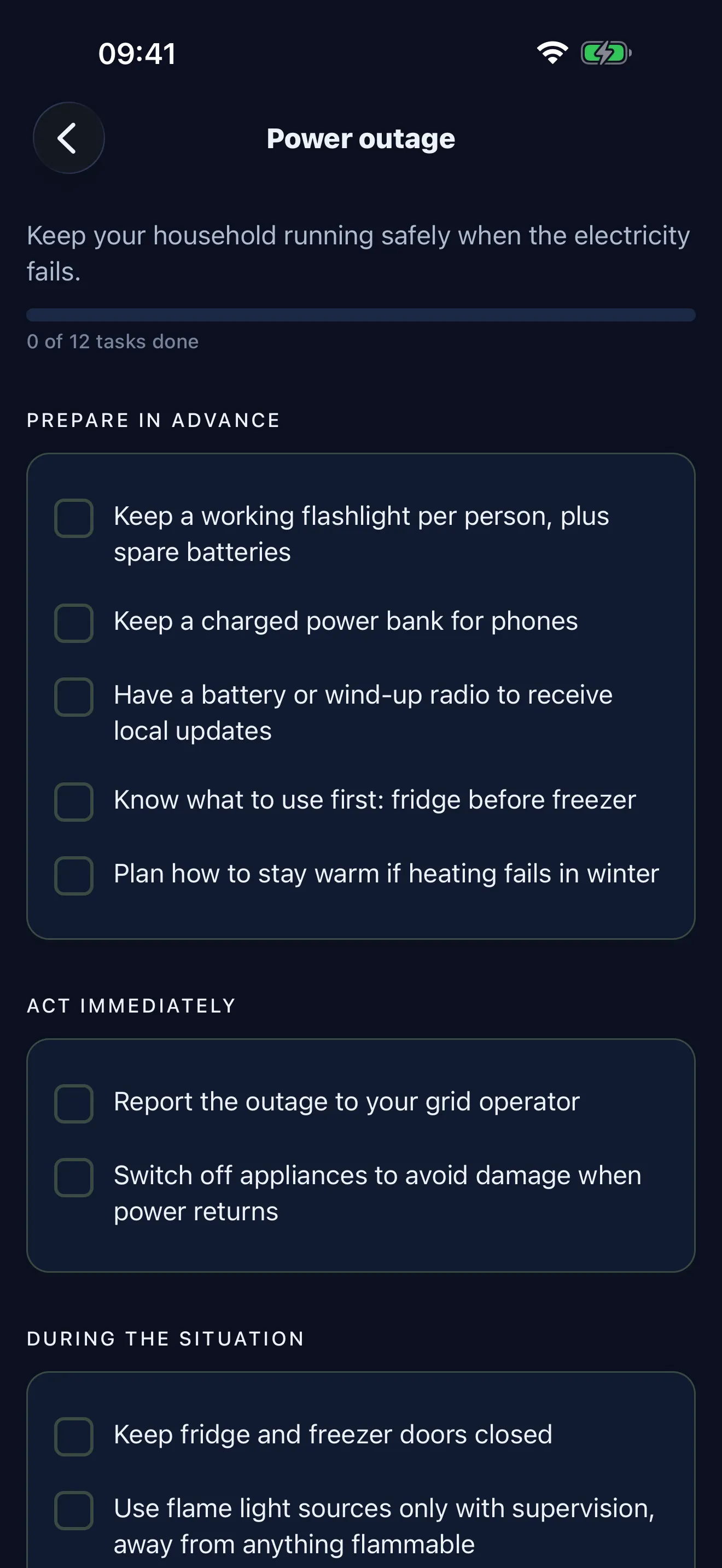
Sign up for free alerts from your city or county and keep a battery-powered or hand-crank radio, so you still hear updates if the power and cell service go down.
Before the storm: your winter storm emergency plan
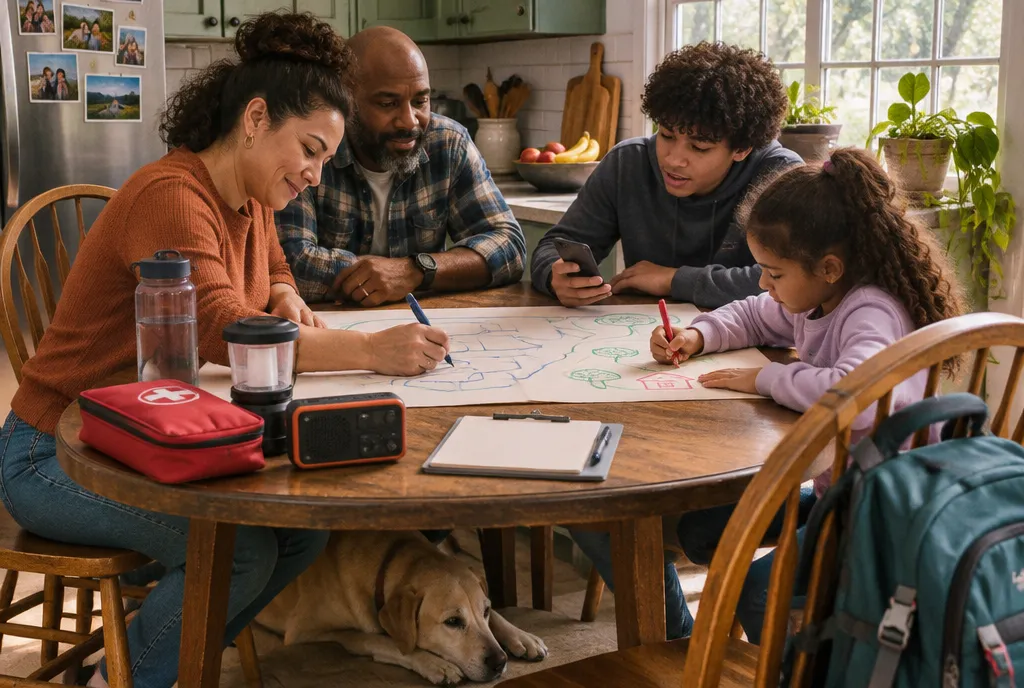
A good plan covers who is in your home, what they need, and where you would go if staying home stops being safe. If you have not written a household plan yet, start with the family emergency plan guide or the free printable plan builder.
Stock up for several days at home
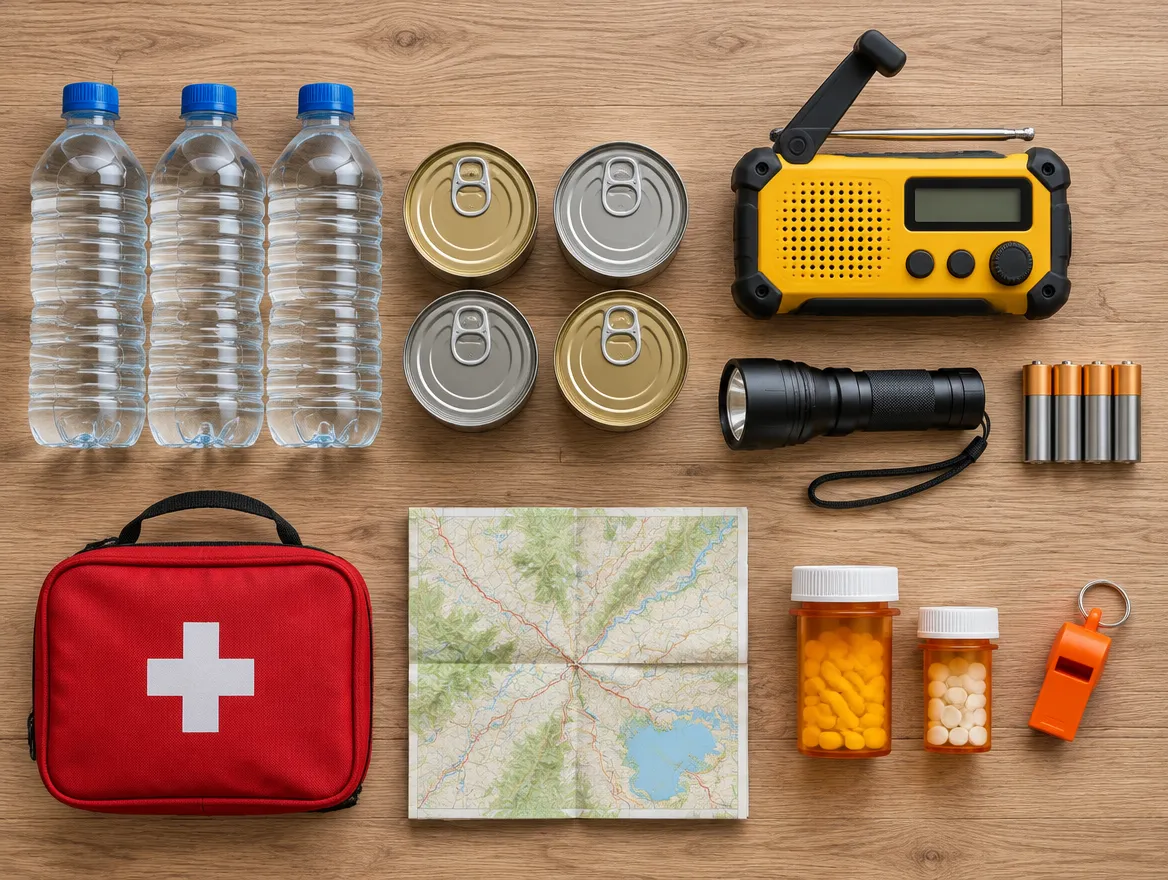
Winter storms can keep you indoors for days and knock out power at the same time. Aim to have:
- Water: at least 1 gallon per person per day, plus extra for pets
- Food that needs no cooking, like canned goods, peanut butter, crackers and cereal
- A manual can opener, paper plates and plastic utensils
- Flashlights and spare batteries (skip candles, which are a fire risk)
- A full supply of prescription medications and any medical supplies
- Warm layers, hats, gloves and extra blankets or sleeping bags for everyone
- Charged phones and power banks
Our 72-hour kit checklist covers the basics in more detail.
Protect your pipes
Frozen pipes can burst and flood your home, often when the thaw arrives. The American Red Cross recommends:
- Insulate pipes in unheated spaces like basements, crawl spaces, attics, garages and under cabinets.
- Disconnect garden hoses and drain outdoor faucets before the cold hits.
- During very cold weather, let cold water drip from faucets served by exposed pipes.
- Open kitchen and bathroom cabinet doors so warm air can reach the plumbing.
- Keep the thermostat at the same temperature day and night.
- If you leave home during cold weather, keep the heat on at no lower than 55°F.
Find your main water shutoff valve now and make sure every adult knows where it is. If a pipe bursts, shutting it off fast limits the damage.
Get your car ready
Even if you plan to stay home, you may need to drive in an emergency. Keep the gas tank full and build a winter car kit with jumper cables, sand or kitty litter for traction, a flashlight, warm clothes, blankets, bottled water and non-perishable snacks. Add an ice scraper, a small shovel and a phone charging cable.
Test your alarms
Install and test smoke alarms and carbon monoxide detectors on every level of your home, ideally with battery backup. Winter is when home heating fires and carbon monoxide poisoning peak, because people improvise heat when the power goes out.
During the storm: heating safely
The biggest dangers inside the house during a winter storm are fire and carbon monoxide (CO). Both are preventable.
Heating without fire risk
- Keep anything that can burn at least 3 feet from space heaters, fireplaces and wood stoves.
- Plug space heaters directly into the wall, not into an extension cord or power strip.
- Turn space heaters off when you leave the room or go to sleep.
- Use flashlights instead of candles.
Carbon monoxide: the silent risk
CO is a colorless, odorless gas that can kill people and pets. It builds up when fuel-burning equipment runs in enclosed spaces. To prevent it:
- Never heat your home with a gas stovetop or oven.
- Use generators, grills and camp stoves outdoors only, away from windows.
- Never run a car in an attached garage, even with the door open.
If anyone starts to feel sick, dizzy or weak, get everyone (including pets) into fresh air right away and call 911.
Generator safety
A portable generator can keep your fridge and a few lights running, but it must stay outside. Ready.gov says to place it at least 20 feet from windows, doors and attached garages. Keep it dry, use heavy-duty extension cords, and let it cool before you refuel, because fuel spilled on hot engine parts can ignite.
If the power goes out
Close off rooms you are not using and gather the household in one room. Hang blankets over doorways and windows, wear layers and hats, and eat and drink regularly, since your body needs fuel to stay warm. Keep the fridge and freezer closed. Our power outage emergency plan covers food safety, medical devices and phone charging in detail.
If your home becomes too cold to stay in safely, go to a warming center, library or another public place with heat. Your local government will announce which ones are open.
Stay off the roads
Travel only if you must. If you get stranded, stay with your car, which is easier for rescuers to find. Run the engine for short periods for heat, keep the exhaust pipe clear of snow, and crack a window slightly.
Protecting older adults, kids and people with medical needs
Older adults lose body heat faster and may not notice they are getting too cold. Call or visit older relatives and neighbors before the storm to check they have heat, food, medications and a working phone. Agree on a time to check in again during the storm.
Babies and young children also lose heat quickly. Dress them in layers, keep them in the warmest room, and keep a close eye on space heaters around small hands.
If anyone in your home relies on powered medical equipment or refrigerated medication, talk to their doctor now about a backup plan. Know where you would go if the power stays off.
Frostbite and hypothermia
Frostbite often affects the nose, ears, cheeks, chin, fingers and toes. Signs include numbness and skin that looks white or grayish-yellow, or feels firm or waxy. Move to a warm room and warm the area gently. Do not rub it or use a heating pad.
Hypothermia signs include shivering, exhaustion, confusion, fumbling hands, memory loss, slurred speech and drowsiness. A body temperature below 95°F is an emergency. Call 911, get the person somewhere warm, and warm the chest, neck, head and groin first.
Pets in a winter storm
Bring pets indoors before the storm. Store extra food and water for them, along with any medications. After walks, wipe their paws to remove ice, salt and de-icing chemicals. Pets are just as vulnerable to carbon monoxide as people, so the same rules apply: no fuel-burning heat sources indoors.
After the storm
The danger does not end when the snow stops.
- Stay away from downed power lines and report them to your utility or 911.
- Watch for falling branches and ice from trees and roofs.
- Shovel slowly. Overexertion can bring on a heart attack, so take frequent breaks and work with a partner if you can.
- Use ice melt or sand on walkways and steps.
- Check pipes as temperatures rise. If a faucet only trickles, a pipe may be frozen. Thaw it with a hair dryer or heating pad, never with an open flame, or call a plumber.
- Check on neighbors, especially older adults and people living alone.
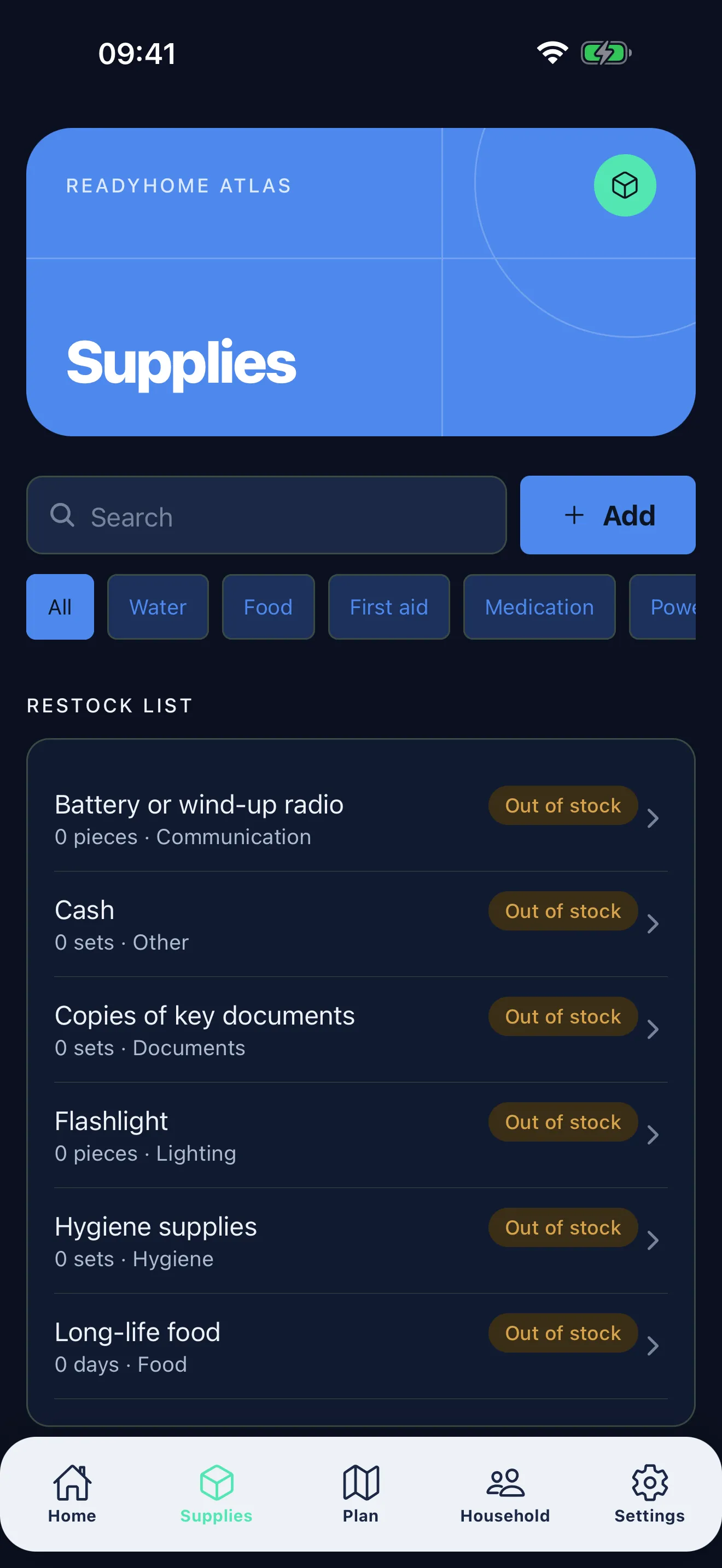
Then take a moment to restock what you used. If you’d rather keep your supply list and expiry dates on your phone, ReadyHome tracks them offline. Update your emergency contact list while the experience is fresh, and note anything you wished you had during the storm.
Winter storm checklist
Ticks are saved in this browser only.
Sources
- Ready.gov: Winter Weather
- American Red Cross: Winter Storm Safety
- American Red Cross: Preventing and Thawing Frozen Pipes
- Ready.gov: Generator Safety
- National Weather Service: Winter Weather Safety
Always follow instructions from your local emergency management office. Call 911 in a life-threatening emergency.