How to Make a Home Fire Escape Plan
Draw a map of your home, find two ways out of every room, pick a meeting spot outside, install working smoke alarms and practice a home fire drill twice a year.
A home fire escape plan is a simple map of your home showing two ways out of every room and one meeting spot outside, backed up by working smoke alarms and a drill your family practices twice a year. You can draw it in about 30 minutes, and it is one of the most useful things you can do for your household’s safety.
Speed is the reason it matters. The American Red Cross and the U.S. Fire Administration both warn that you may have less than two minutes to escape once the smoke alarm sounds. There is no time to figure out a route in the dark. Everyone needs to already know it.
Why fires leave so little time
Ready.gov describes how fast a home fire develops: a small flame can become a major fire in less than 30 seconds, and thick black smoke can fill a house within minutes. Fire starts bright but quickly turns into complete darkness.
Smoke and toxic gases kill more people than flames do. Ready.gov notes they make you disoriented and drowsy, and that heat collects high in a room, which is why you stay low when escaping. A plan you have practiced lets your body move on autopilot while your mind is slow.
Step 1: Draw a map of your home
The U.S. Fire Administration’s first step is to draw a map of your home that includes all doors and windows. Do this with your kids; they remember plans they help make.
- Draw each floor on a separate sheet of paper.
- Mark every door and window.
- Label bedrooms with who sleeps there.
- Mark where each smoke alarm is.
- Mark your outside meeting place.
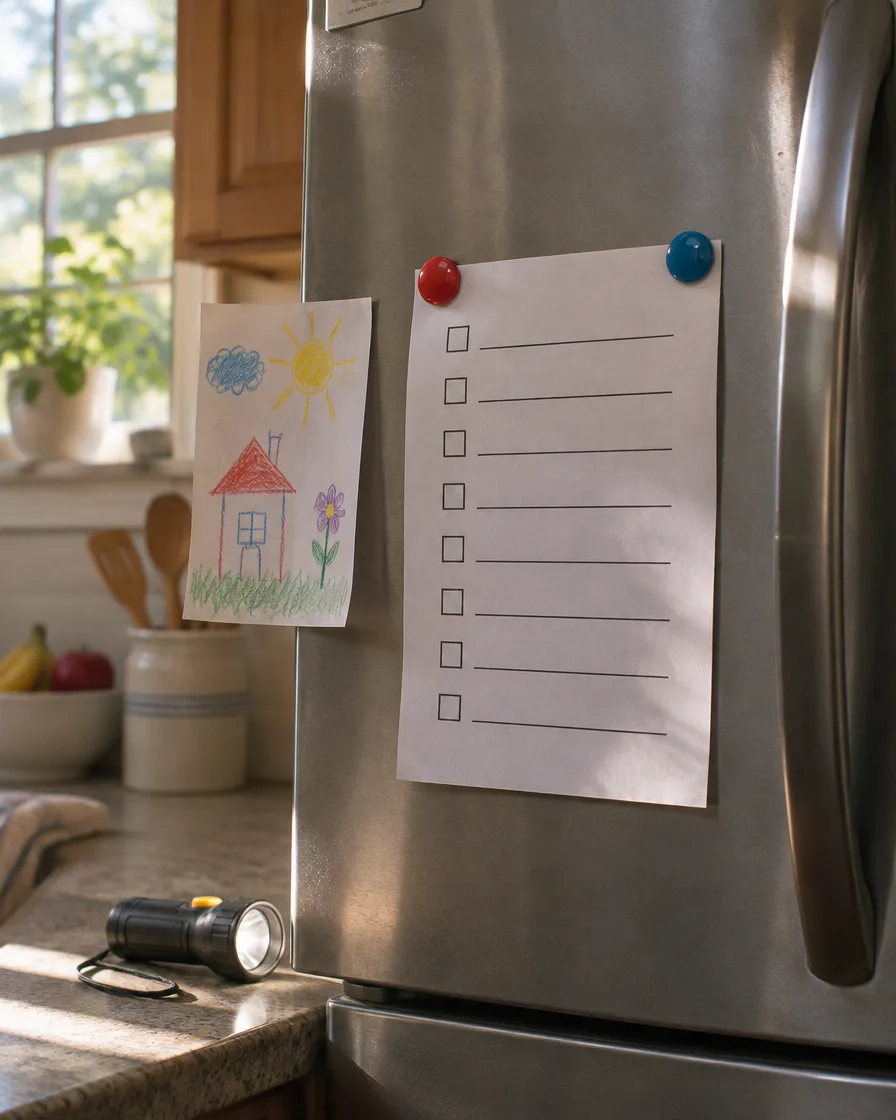
Hang the finished map where everyone can see it, such as on the fridge or inside a bedroom door. The free family emergency plan template has space to record your fire escape routes alongside the rest of your plan.
Step 2: Find two ways out of every room
The USFA, Ready.gov and NFPA all recommend two ways out of every room. The first is usually the door. The second is usually a window, in case the hallway is blocked by fire or smoke.
Walk through every room and check:
- Windows open easily. Paint, swelling or old locks can stick them shut.
- Screens come out quickly. Practice removing them.
- Security bars can be opened. Ready.gov says to make sure bars can be properly opened from inside. Bars without a quick-release mechanism can trap people.
- Nothing blocks the path. Furniture, toys and storage should not block doors or windows.
- Wheelchairs and walkers fit. If anyone uses a mobility device, check that it fits through each exit doorway.
For bedrooms above the ground floor, ask your local fire department what escape options are appropriate for your home.
Step 3: Pick an outside meeting place
Choose one spot outside, in front of your home, where everyone goes and stays. The USFA recommends a meeting place in front of your home because that is where firefighters arrive.
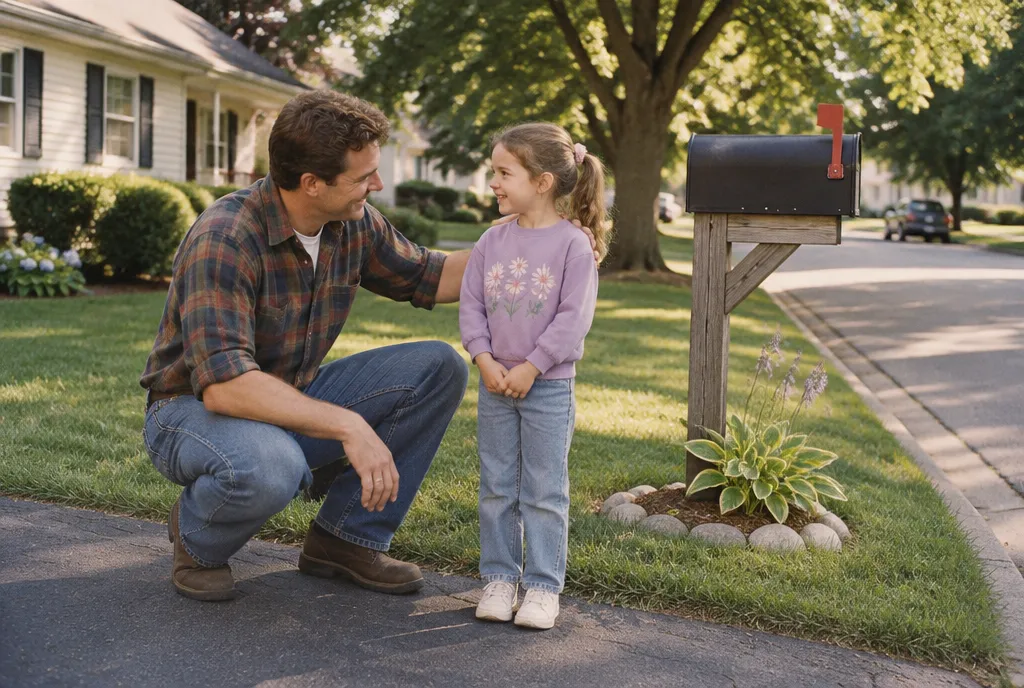
Good meeting places are fixed and easy to name: a mailbox, a light pole, a particular tree or a neighbor’s driveway across the street. Once everyone is there, you can count heads and tell firefighters immediately if someone is missing.
This is the same “right outside your home” meeting place the Red Cross recommends for any sudden emergency, so it belongs in your family emergency plan too.
Step 4: Check your smoke alarms
A working smoke alarm is your early warning. Ready.gov notes it significantly increases your chances of surviving a deadly home fire. Follow these basics from Ready.gov and the Red Cross:
- Install smoke alarms on every level of your home, including the basement.
- Put them inside every bedroom and outside each sleeping area.
- Test them every month by pressing the test button.
- Replace batteries at least twice a year, unless your alarms use 10-year sealed lithium batteries.
- Replace the whole unit every 10 years, or as the manufacturer instructs.
- Never disable an alarm while cooking.
If someone in your home is deaf or hard of hearing, Ready.gov points out that alarms with a vibrating pad or flashing light are available. Audible alarms designed for people with low vision are available too.
Step 5: Plan for people who need help
Some members of your household cannot get out on their own. Decide ahead of time who helps whom.
- Babies and toddlers: Assign a specific adult to each young child, plus a backup.
- Kids who sleep heavily: Some children do not wake up to a smoke alarm. Find out during a night drill and plan for it.
- Older adults and people with disabilities: Consider moving their bedroom to the ground floor, near an exit. Keep glasses, hearing aids and mobility aids within reach of the bed.
- Pets: Do not go back inside for a pet. Ready.gov advises telling firefighters right away if pets are trapped.
Ready.gov also recommends teaching children not to hide from firefighters. A firefighter in full gear can look frightening to a child, so show kids pictures or visit a fire station so they know what to expect.
Step 6: Teach the escape skills
Your fire escape plan should include a few skills everyone practices. These come from Ready.gov’s home fire guidance:
- Get low and go. Drop to the floor and crawl under the smoke to your exit. Heavy smoke and poisonous gases collect along the ceiling first.
- Feel the door. Before opening a door, touch the doorknob and the door. If either is hot, or smoke is coming around it, keep it closed and use your second way out.
- Open slowly. If the door is cool, open it slowly and be ready to shut it fast if you see smoke or fire.
- Get out, stay out. The Red Cross says never go back inside for anything or anyone.
- Call 911 from outside. Use a cell phone or a neighbor’s phone once you are safely out.
- If you cannot get out: Close the door, cover vents and cracks with cloth or tape, call 911 and say where you are. Signal at the window with a flashlight or light-colored cloth.
- Stop, drop and roll. If your clothes catch fire, stop, drop to the ground, cover your face with your hands and roll until the flames are out.
Ready.gov also recommends sleeping with bedroom doors closed, which slows smoke and heat.
Step 7: Run a fire drill at home
The USFA suggests starting your home fire drill by pushing the smoke alarm’s test button, so everyone learns the sound. Then:
- Everyone gets out using their first exit and goes to the meeting place.
- Run it again, pretending the first exit is blocked, so everyone uses their second way out.
- Practice crawling low and feeling doors.
- Practice with eyes closed or lights off. Ready.gov recommends practicing feeling your way out in the dark.
- Time it. Aim to have everyone out and at the meeting place in under two minutes.
Practice twice a year, as the Red Cross and Ready.gov recommend, and make at least one of those drills a night drill. Tell kids ahead of time at first; once they know the routine, you can try a surprise drill.
Apartments and high-rise buildings
If you live in an apartment, your plan also depends on the building. The USFA’s guidance for high-rise residents:
- Know where every exit stairway is on your floor.
- If there is a fire, leave and close your apartment door behind you.
- Pull the fire alarm on your way out.
- Use the stairs, not the elevator, unless the fire department tells you otherwise.
- Go to your outside meeting place, stay there and call the fire department. Tell them if someone is trapped.
Prevent fires in the first place
The best escape is the one you never need. Keep these habits from Ready.gov:
- Stay in the kitchen when frying, grilling or broiling, and turn off the stove if you leave.
- Keep a fire extinguisher in the kitchen and ask your local fire department about training.
- Consider a home sprinkler system if you are building or renovating.
Fold it into your whole plan
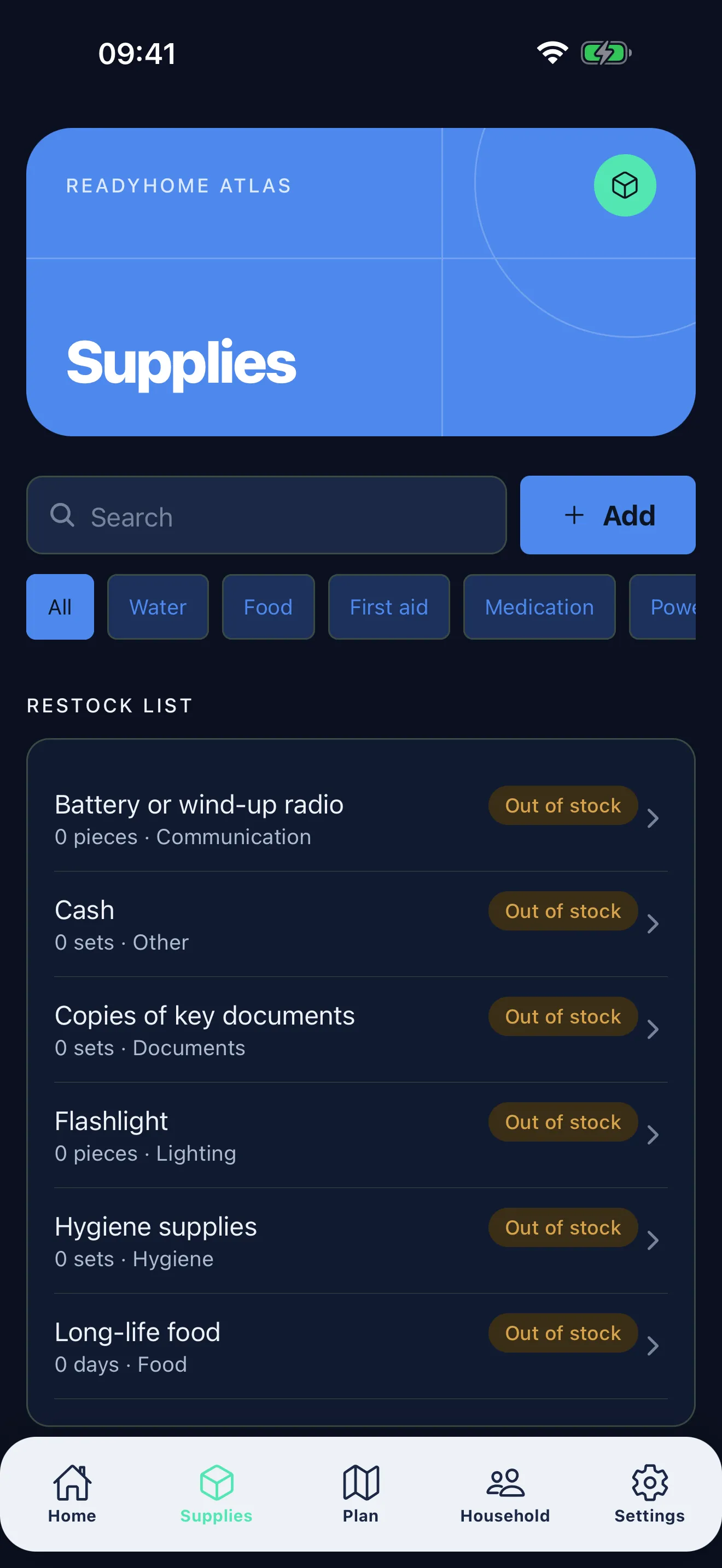
Your home fire escape plan is one part of a larger household plan. Add your meeting place and escape map to your family emergency plan, make sure your emergency contact list is current so a neighbor can reach relatives, and keep copies of important documents in your go bag so recovery is easier if the worst happens. If you’d rather keep your escape plan and drill reminders on your phone, ReadyHome stores them offline.
Home fire escape plan checklist
Ticks are saved in this browser only.
Sources
- U.S. Fire Administration: Home Fire Escape Plans
- Ready.gov: Home Fires
- American Red Cross: Home Fire Safety
- NFPA: How to Make a Home Fire Escape Plan
Always follow instructions from your local emergency management office. Call 911 in a life-threatening emergency.