Wildfire Evacuation Checklist for Families
Prepare your home and go bags before fire season, pack the car and park facing out when fire is nearby, grab the 6 P's, and leave early. Never wait for an order if you feel unsafe.
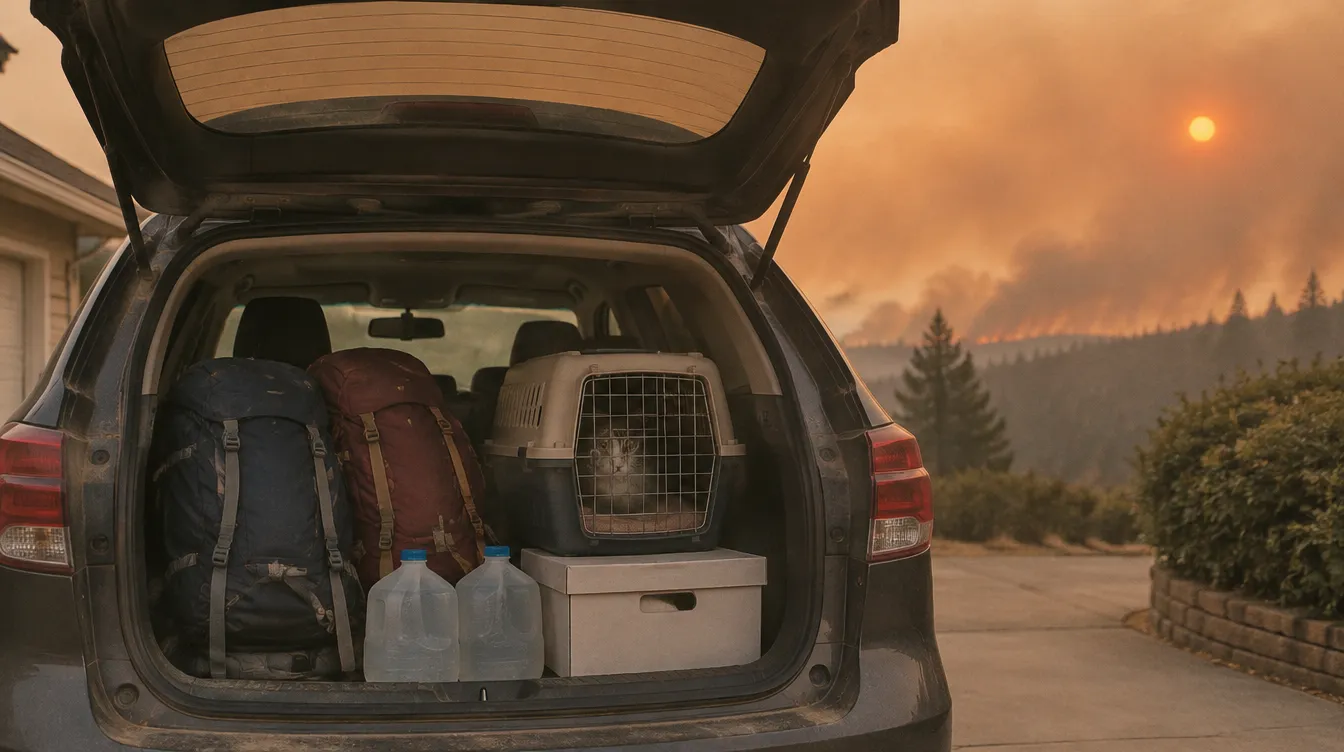
The best wildfire evacuation checklist has two parts: what you do weeks before a fire (prepare the house, pack go bags, plan routes) and what you do in the hour before you leave (load the car, grab the 6 P’s, go). Families who do the first part well have very little to think about during the second.
The single most important rule: leave early. Wildfires move fast, roads clog with traffic and smoke, and firefighters cannot knock on every door. If officials tell you to go, go immediately. If you feel unsafe before any order arrives, you do not need permission to leave. Local officials’ instructions always come first.
Ready, Set, Go: the wildfire framework
Fire departments across the US use a three-stage approach called Ready, Set, Go. It is a useful way to organize your plan.
- Ready (before fire season): Prepare your home and land, write your family emergency plan, pack go bags and learn your evacuation zone.
- Set (fire in your area): Stay alert, monitor official sources, pack the car and get ready to leave on short notice.
- Go (leave early): Leave as soon as you feel threatened or are told to. Follow your plan and your route.
Ready: before fire season
Sign up for alerts and learn your zone
Register for your county’s emergency alert system and keep Wireless Emergency Alerts switched on in each phone’s settings. Many counties now divide their area into numbered evacuation zones, so look yours up and write it down. Learn the difference between the terms your county uses, usually an evacuation warning (get ready, leave now if you need extra time) and an evacuation order (leave now).
Plan routes and a destination
Pick at least two routes out of your neighborhood, in different directions, and drive them once so they feel familiar. Choose where you will go: a friend or relative outside the fire area, a hotel, or a public shelter. Remember that many shelters accept only service animals, so find pet-friendly options ahead of time.
Agree on an out-of-area contact that everyone checks in with, and put it on your emergency contact list.
Defensible space basics
Defensible space is the buffer between your home and the vegetation around it. It slows a fire and gives firefighters room to work. Fire agencies generally describe it in zones:
- 0-5 feet from the house: the most important area. Remove dead leaves, pine needles, bark mulch, firewood and anything else that can catch embers. Use gravel or stone instead of wood chips. Clean gutters and roofs.
- 5-30 feet: keep plants spaced out and well watered, trim tree branches away from the roof, and remove dead plants and dry grass.
- 30-100 feet: reduce dense brush, mow dry grass and create space between trees and shrubs.
State and local rules vary, so check with your fire department. Keep a hose long enough to reach all sides of your home.
Pack go bags now
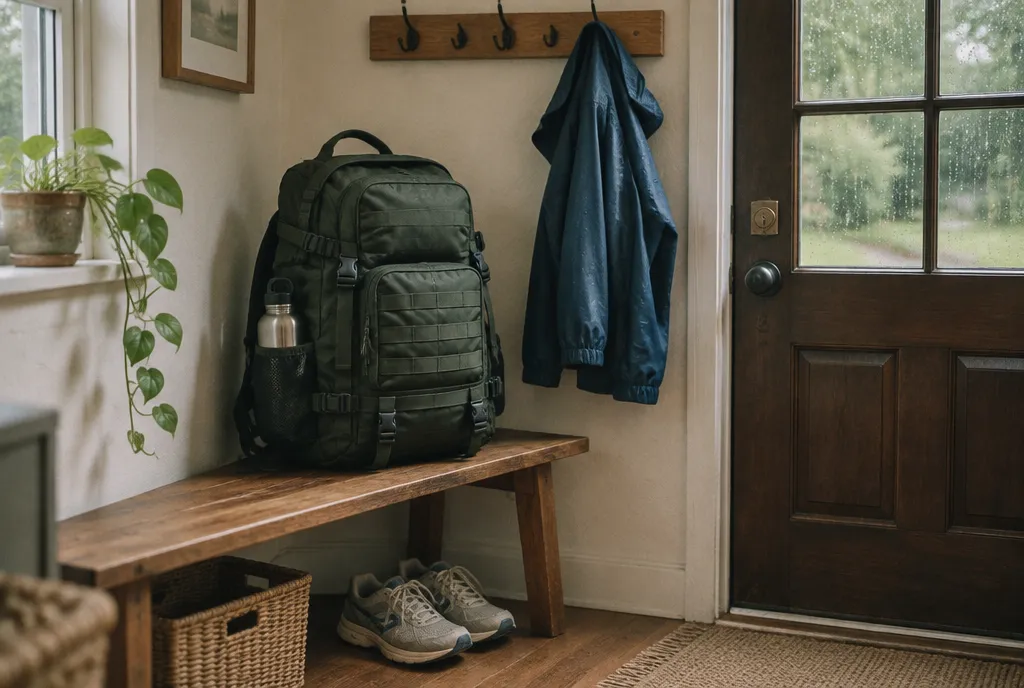
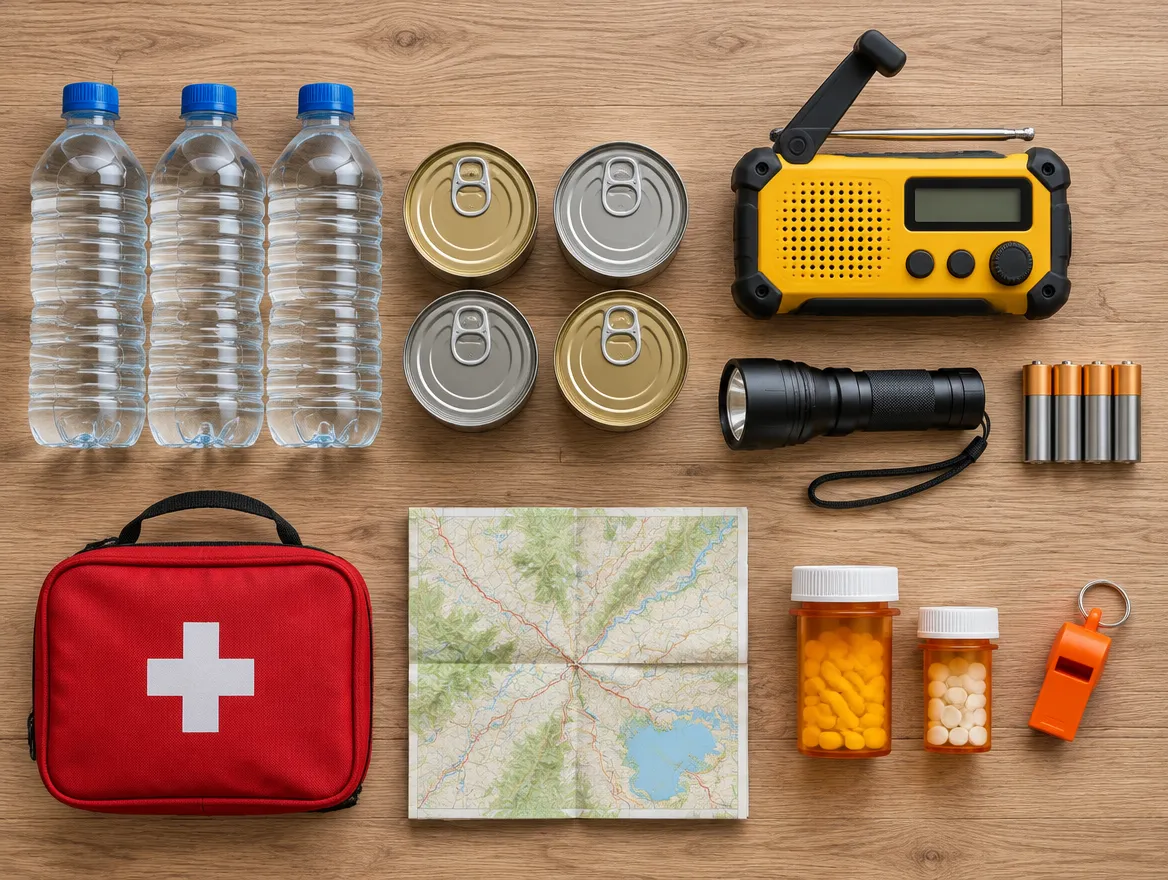
Every person and pet needs a go bag with at least 3 days of supplies: water, food, medications, a flashlight, a phone charger, copies of documents, a change of clothes and an N95 mask. Our go bag checklist covers what to pack for adults, kids, babies and pets.
Set: when a fire is nearby
When a fire starts in your area, get ready as if you will leave, even if you are not under a warning yet.
- Monitor official sources: your county alert system, local fire agency and local news.
- Load the car with go bags, the 6 P’s and pet carriers.
- Park facing the direction of escape, with windows closed and keys in a set place. If you use a garage, know how to open the door by hand if the power goes out.
- Keep the gas tank at least half full.
- Bring pets inside so you can leave without searching for them. Move large animals and livestock early.
- Dress for the evacuation: long sleeves, long pants, sturdy shoes, and natural fabrics such as cotton or wool.
Prepare the house in a few minutes (only if time allows)
- Close all windows and doors, but leave them unlocked.
- Remove flammable curtains or move furniture to the center of rooms, away from windows.
- Shut off the gas at the meter and turn off pilot lights.
- Leave lights on so firefighters can see the house in heavy smoke.
- Move outdoor furniture, cushions and doormats inside or away from the house.
- Connect garden hoses so firefighters can use them.
None of this is worth staying for. If you are told to leave, leave.
The 6 P’s: what to take
The 6 P’s are a widely used memory aid for what to grab when you have to leave fast. Pack them in this order:
- People and pets. Everyone in the house, plus pets with leashes, carriers, food and water.
- Papers. IDs, birth certificates, passports, insurance policies, deeds and other important records. Copies on a USB drive or in secure cloud storage work too.
- Prescriptions. Medications, eyeglasses, hearing aids and medical devices, plus a written list of doses and doctors.
- Pictures. Irreplaceable photos and keepsakes.
- Personal computers. Laptops, hard drives, phones and chargers.
- Plastic. Credit cards, ATM cards and some cash in small bills, since card readers may not work.
If you have five minutes, take people, pets, medications and your go bags. Everything else is replaceable.
Go: leave early
Leaving early is safer than any other choice. It gives you more route options, less traffic and better visibility, and it keeps roads clear for fire engines. People with medical needs, older adults, families with young children and anyone with pets or livestock should leave at the warning stage, not the order.
When you go:
- Take your planned route unless officials direct you elsewhere.
- Drive with headlights on and windows closed. Set the air to recirculate.
- Tell your out-of-area contact where you are heading.
- Never go back for belongings.
If you are trapped by fire, call 911 and give your location. Stay in a building or a car if you can rather than trying to run through smoke. Turn on lights so rescuers can find you.
Smoke and air quality
Smoke can affect your family long before flames are close, and even if you are not under any warning. Check air quality at AirNow.gov and limit time outside when it is unhealthy.
- Keep windows and doors closed and run a portable HEPA air cleaner in one room.
- Use the highest efficiency filter your central air system can handle.
- Wear a well-fitted N95 mask outdoors. Cloth masks and surgical masks do not filter smoke well.
- Children, older adults, pregnant people and anyone with asthma, lung or heart conditions are most sensitive. Talk to a doctor in advance about a plan for smoke days.
Planning for people who need more time
Some households need hours, not minutes, to evacuate safely. Plan for them first.
- Older adults and people with disabilities: arrange a ride in advance if they do not drive, and decide who checks on them. Pack mobility aids, spare glasses, hearing aids and chargers for medical devices.
- Medical needs: keep a written list of medications and doses, and ask your doctor or pharmacist about keeping a backup supply. If someone depends on oxygen or powered equipment, plan for a long power outage at your destination.
- Babies and young kids: pack diapers, formula and familiar comfort items, and keep car seats installed.
- Livestock and large animals: arrange trailers and a destination well before fire season, and move animals at the first warning.
After the fire
Do not return home until officials say it is safe. Watch for hot ash, smoldering debris, charred trees and live embers, and wear long sleeves, gloves, sturdy shoes and an N95 mask while you check the property. Photograph damage for insurance before cleaning up.
Keep the plan in one place
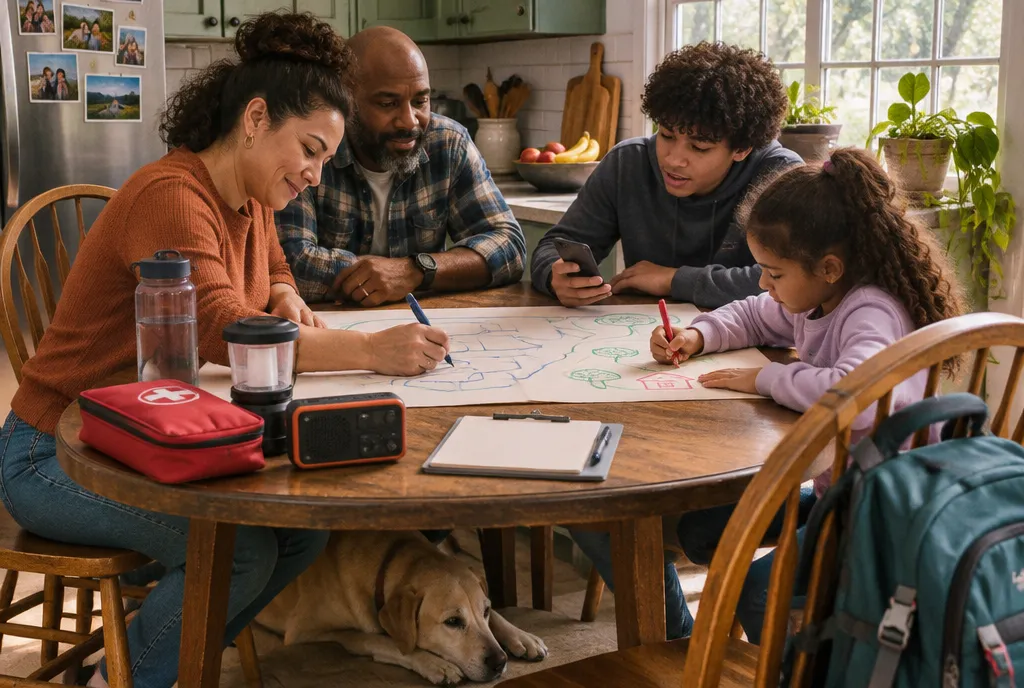
Write down your zone, routes, destination, contact and the 6 P’s on one page. The free family emergency plan template is set up for exactly this. If you’d rather keep it on your phone, ReadyHome stores your evacuation plan and checklists offline, so it works when cell service does not.
Wildfire evacuation checklist
Ticks are saved in this browser only.
Sources
- Ready.gov: Wildfires
- CAL FIRE Ready for Wildfire: Wildfire Action Plan
- CAL FIRE Ready for Wildfire: Go! Evacuation Guide
- American Red Cross: Wildfire Safety
- AirNow: Wildfires and Smoke
- Ready.gov: Prepare Your Pets for Disasters
Always follow instructions from your local emergency management office. Call 911 in a life-threatening emergency.