Emergency Plan for a Power Outage: What to Do Before, During and After
Keep the fridge and freezer closed, use flashlights not candles, run generators outdoors only, plan for medical devices and leave if your home gets too hot or cold.

A good emergency plan for a power outage answers five questions: how you will see, how you will keep food and medicine safe, how you will power anything critical (especially medical devices), how you will stay warm or cool, and when you will leave. Answer them before the lights go out and an outage becomes an inconvenience instead of an emergency.
Outages happen during winter storms, hurricanes, heat waves and sometimes for no visible reason at all. The plan below works for all of them. Your local officials and utility will have the most current information during an outage, so follow their instructions first.
Before an outage: build your plan
Take stock of what needs power
Walk through your home and list everything that depends on electricity. Most families find a few surprises:
- Medical equipment like oxygen concentrators, CPAP machines, powered wheelchairs or home dialysis
- Refrigerated medications such as insulin
- A well pump (no power can mean no running water)
- A sump pump in a basement prone to flooding
- Electric heat, air conditioning or the blower on a gas furnace
- Garage door openers (learn how to open yours manually)
- Phones, internet and cordless landlines
For each item, decide what you would do if the power were off for 4 hours, 1 day and 3 days.
Plan for medical devices and medicines
If anyone in your home relies on a powered medical device, talk to their doctor or the equipment supplier now. Ask how long the battery lasts, whether a backup battery or generator is right for it, and what to do if both run out. Many utilities keep a list of customers who depend on medical equipment, so ask yours.
Ask a doctor or pharmacist how to store refrigerated medicines during an outage. Ready.gov notes that refrigerated medicine should be thrown out if the power has been out for more than a day, unless the label says otherwise, so plan with your provider for a replacement before you need one.
Stock your outage supplies
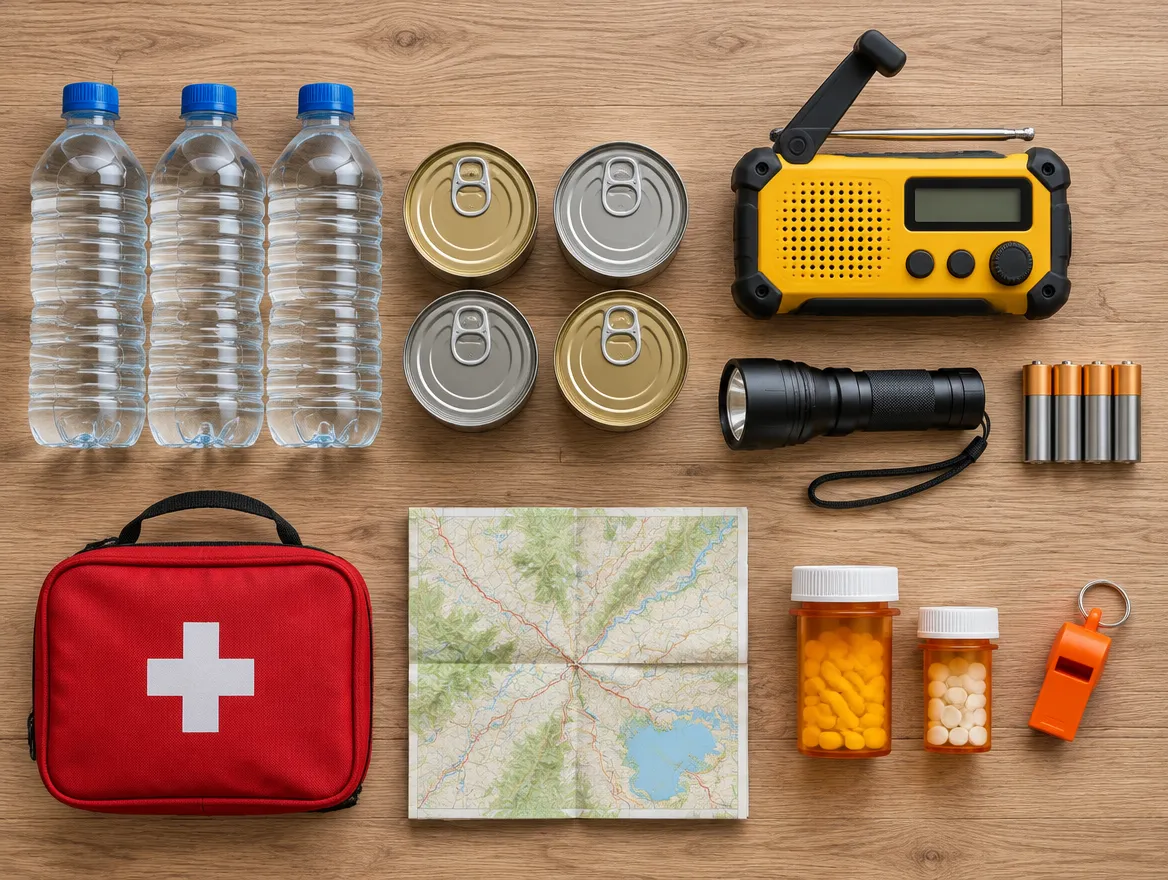
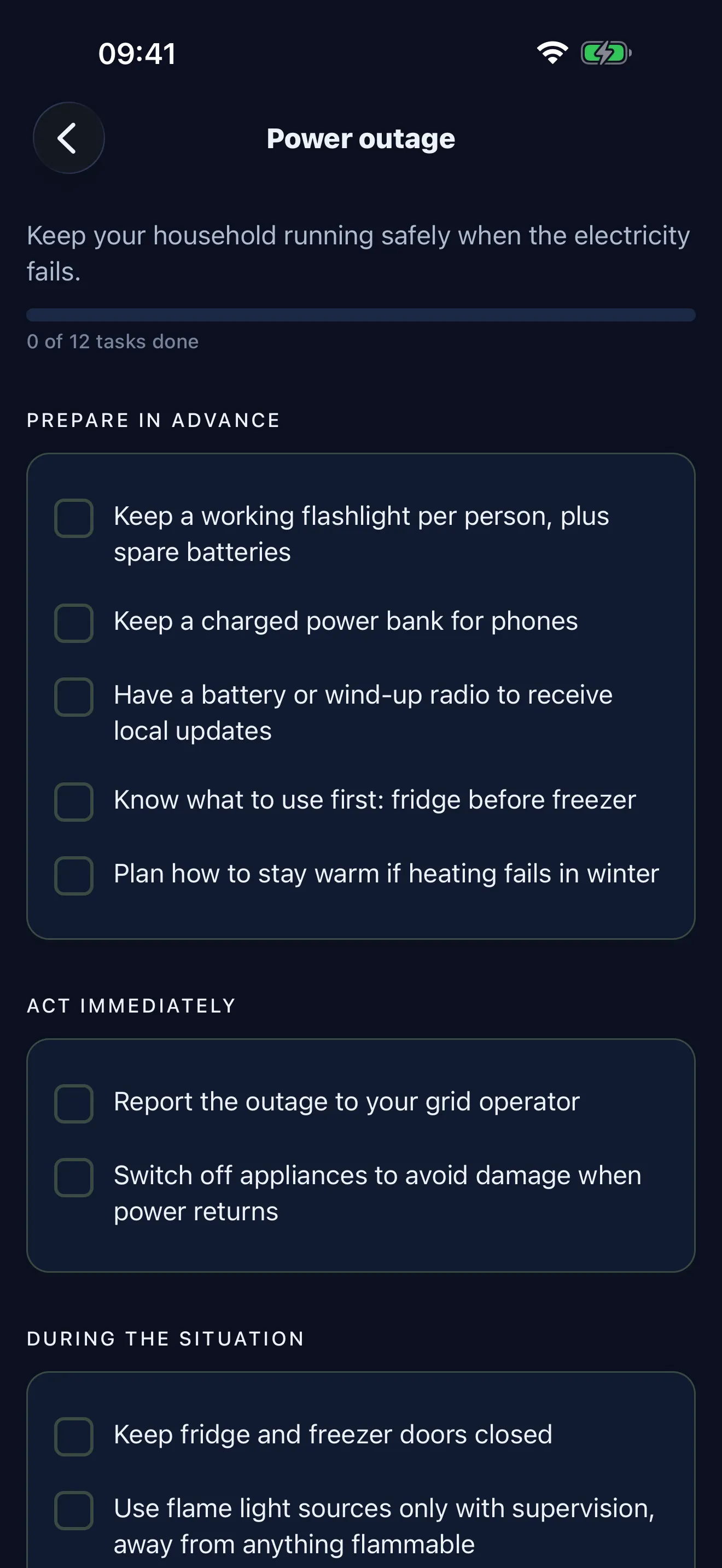
- Flashlights and spare batteries for every person (skip candles, which are a fire risk)
- A battery-powered or hand-crank radio
- Water: at least 1 gallon per person per day, more if you rely on a well
- Food that needs no cooking or refrigeration, plus a manual can opener
- Coolers and an appliance thermometer for the fridge and freezer
- Charged power banks and a car phone charger
- Extra blankets for cold weather, and a battery fan for hot weather
The American Red Cross suggests keeping enough food and water for at least two weeks at home. Our 72-hour kit checklist is a good starting point, and you can build up from there.
Install CO detectors
Carbon monoxide poisoning is common during outages because people turn to generators, grills and camp stoves for heat and cooking. Install working CO detectors on every level of your home, with battery backup, and test them.
Keep the car ready
Keep your gas tank at least half full. Gas stations need power to pump, and your car can charge phones and serve as a warm or cool place for a short time (outdoors only, never in a garage).
During the outage: what to do
- Check the scope. See whether neighbors have power, then report the outage to your utility.
- Switch to safe light. Use flashlights and battery lanterns, not candles.
- Protect your electronics. Unplug appliances and electronics to avoid damage from power surges when power returns. Leave one lamp on so you know when it is back.
- Keep the cold in. Keep fridge and freezer doors closed.
- Check on people. Call older relatives and neighbors, and anyone who uses medical equipment.
- Save your battery. Lower screen brightness, close apps, and text instead of calling.
Food safety: the 4-hour and 48-hour rules
| Appliance | How long food stays cold (door closed) |
|---|---|
| Refrigerator | About 4 hours |
| Full freezer | About 48 hours |
| Half-full freezer | About 24 hours |
Eat fresh, perishable foods first. If the outage will last longer than 4 hours, move milk, meat and leftovers into a cooler with ice. Use a thermometer to check temperatures. Throw out perishable food that has been at 40°F or warmer for 2 hours or more. Never taste food to decide whether it is safe. When in doubt, throw it out.
Generators without carbon monoxide
A portable generator can keep your fridge, a few lights and a medical device running, but it is also the most common source of CO poisoning during outages. Ready.gov’s rules:
- Run it outdoors only, at least 20 feet from windows, doors and attached garages.
- Never run it in a garage, basement or shed, even with the door open.
- Keep it dry and out of rain and floodwater.
- Plug appliances into it with heavy-duty extension cords.
- Let it cool before refueling.
Do not plug a generator into a wall outlet to power the house. Have an electrician install a proper transfer switch if you want to power home circuits.
If anyone feels dizzy, sick or weak, get everyone outside into fresh air immediately and call 911. CO is colorless and odorless, and pets are affected too.
Phones and communication
Your phone is your link to alerts, family and help. Charge it fully whenever a storm or heat wave is forecast. Keep at least one charged power bank per adult, and know that your car can charge phones while it runs outdoors. Keep a printed copy of key phone numbers in case your phone dies; our emergency contact list guide shows what to include.
Water
If you are on city water, it usually keeps flowing during an outage, but follow any boil-water notice from local officials. If you have a well, the pump stops when the power does. Fill clean containers and a bathtub (for flushing toilets) when an outage looks likely.
Staying warm or cool
In cold weather, gather everyone in one room, close the doors to unused rooms, cover windows with blankets and dress in layers. Never use a gas stove or oven to heat your home. Our winter storm preparedness guide covers safe heating in detail.
In hot weather, stay on the lowest floor, close blinds on sunny windows, drink water regularly and wear light clothing. Older adults, babies, young children and people with chronic health conditions are most at risk from heat and cold. Check on them often.
When to leave home
Decide in advance what will make you leave, so you are not deciding in the dark. Leave if:
- Your home is too hot or too cold to stay safely
- Someone needs powered medical equipment and your backup power is running low
- Local officials tell you to evacuate
- You smell gas or suspect damage to your home
Communities often open warming centers, cooling centers and charging stations during long outages. Know where your nearest options are, and keep a go bag ready so leaving takes minutes, not an hour. Bring pets, their food and any medications with you.
After the power comes back
- Stay at least 35 feet away from downed power lines and anything touching them, and call 911.
- Do not touch electrical equipment if it is wet or you are standing in water.
- Plug appliances back in one at a time to avoid overloading circuits.
- If circuit breakers tripped, have an electrician check them before you reset them.
- Go through the fridge and freezer with a thermometer and discard anything unsafe.
- Replace medications that may have spoiled.
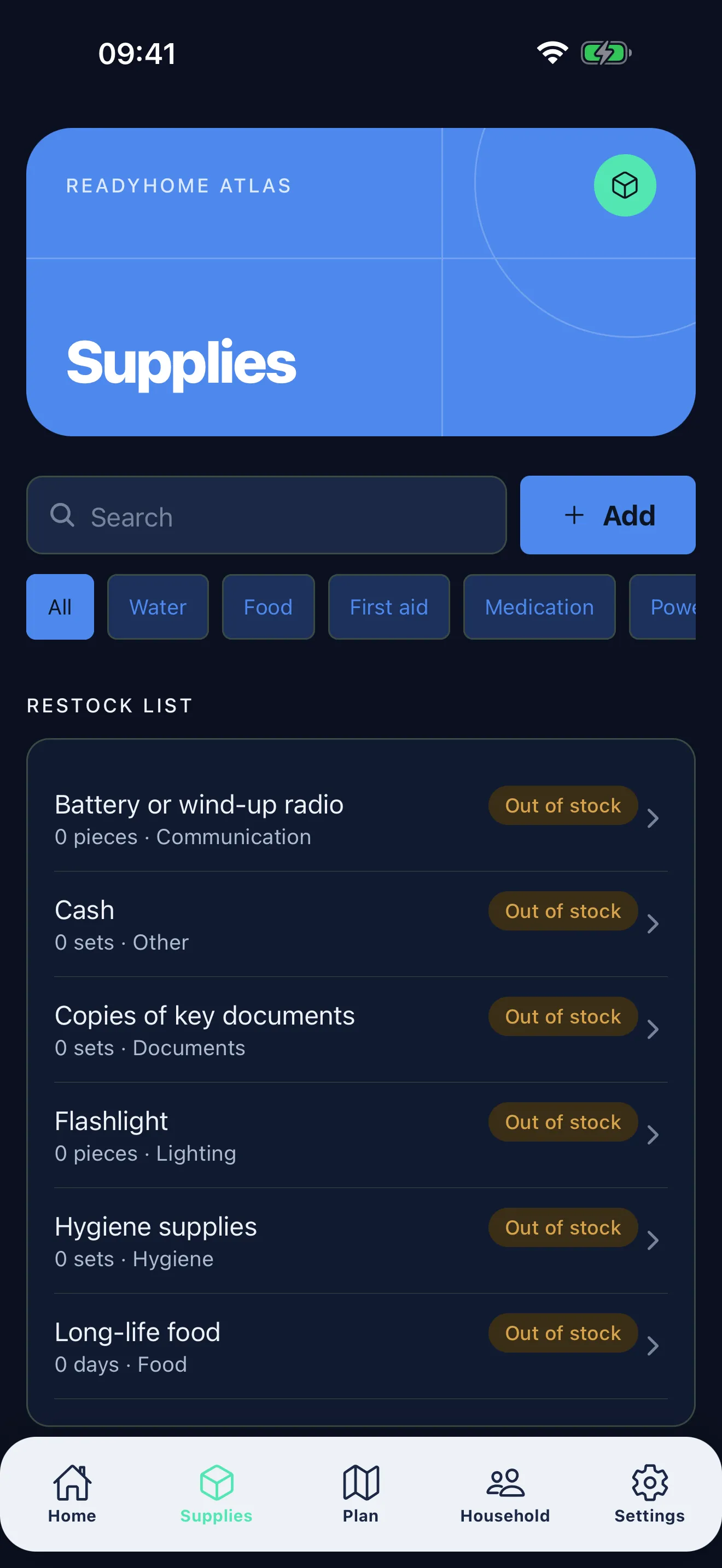
Finally, restock batteries, water and food, and note what you were missing. If you’d rather keep that list on your phone with reminders when supplies expire, ReadyHome does it offline. Add your outage plan to your family emergency plan so everyone knows it.
Power outage checklist
Ticks are saved in this browser only.
Sources
- Ready.gov: Power Outages
- American Red Cross: Power Outage Safety
- Ready.gov: Generator Safety
- Ready.gov: Winter Weather
Always follow instructions from your local emergency management office. Call 911 in a life-threatening emergency.