Earthquake Emergency Plan for Your Family
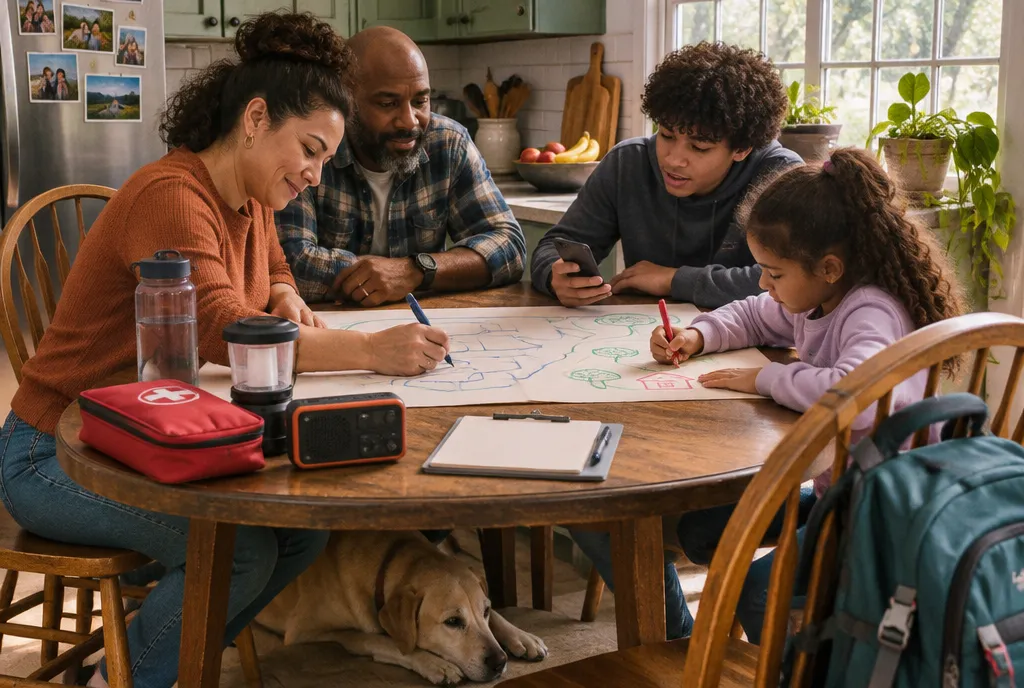
An earthquake plan means securing heavy items now, practicing Drop, Cover, Hold On, knowing when to shut off gas, and agreeing how your family reunites after the shaking stops.
An earthquake emergency plan comes down to four things: secure the heavy objects in your home before anything happens, make Drop, Cover, Hold On automatic for everyone, know exactly when (and when not) to shut off the gas, and agree how your family reconnects if you are apart when the shaking starts.
Earthquakes give little or no warning, so the plan has to be done in advance. The good news is that most of the work is a single weekend: a few straps, some rearranging and one family conversation. This guide walks through each step. Local officials’ instructions always come first, especially after a large quake.
Why earthquakes need their own plan
In US earthquakes, many injuries come from things falling or flying, not from buildings collapsing. Bookcases tip over, TVs slide off stands, glass breaks and kitchen cabinets empty onto the floor. That makes earthquake preparedness different from storms or floods: the most useful work happens inside your home, at the level of individual pieces of furniture.
It also changes how you think about communication. A quake can hit while kids are at school and adults are at work, with phone networks overloaded within minutes. Your family emergency plan should already cover contacts and meeting places. For earthquakes, make sure it covers school pickup, too.
Step 1: Secure your space
Walk through each room and ask one question: what could fall on someone, block an exit or start a fire? Then fix it.
- Water heater. Strap it to the wall studs with two metal straps, one near the top and one near the bottom. A water heater that tips can break its gas line and its water line at the same time.
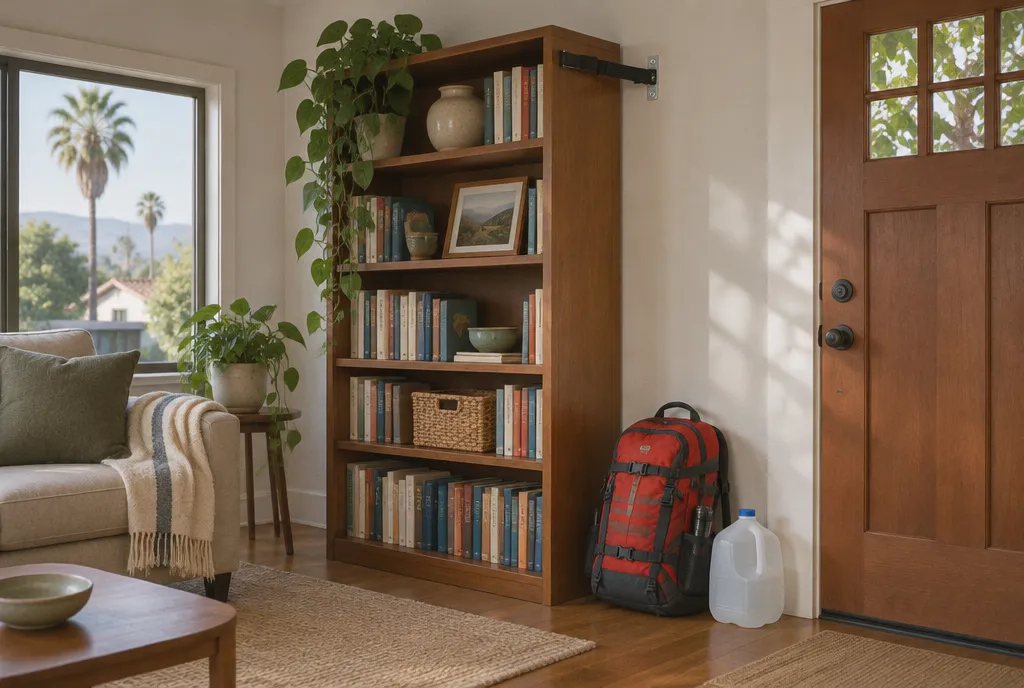
- Tall furniture. Anchor bookcases, dressers and cabinets to wall studs with furniture straps or L-brackets.
- TVs and computers. Use safety straps designed for electronics.
- Shelves. Move heavy and breakable items to lower shelves. Add latches to kitchen cabinets so dishes stay inside.
- Beds and couches. Move heavy frames, mirrors and shelves away from places where people sit or sleep.
- Gas appliances. Use flexible connectors where gas lines meet appliances such as the water heater, stove and dryer.
Keep sturdy shoes and a flashlight next to each bed. Many earthquake injuries happen afterward, when people walk barefoot through broken glass in the dark.
Step 2: Practice Drop, Cover, Hold On
The official advice in the US is simple and the same everywhere:
- Drop onto your hands and knees where you are, before the shaking knocks you down.
- Cover your head and neck with one arm. If a sturdy table or desk is close, crawl under it.
- Hold on to your shelter, or to your head and neck, until the shaking stops.
Do not run outside, and do not stand in a doorway. Trying to move while the floor is shaking is how many people get hurt.
A few situations call for small changes:
- In bed: stay there and cover your head and neck with a pillow.
- Using a wheelchair or walker: lock your wheels, get as low as you safely can, and cover your head and neck with your arms or a pillow.
- Using a cane: sit in a chair or on the bed if you can, and cover your head and neck with both hands.
- Outdoors: move to an open area away from buildings, trees, streetlights and power lines, then drop.
- Driving: pull over away from overpasses and power lines, stop and set the parking brake.
Practice this with your kids until it becomes a reflex. Call out “earthquake!” at random times at home and see how fast everyone drops. Young children can learn it as a game. Older adults or anyone who cannot get down easily should practice the seated version.
Step 3: Know your gas shutoff, and when to use it
Every adult in your home should know where the gas meter and main shutoff valve are, and a wrench should be kept nearby. But this is the part people often get wrong: do not shut off the gas just because there was an earthquake.
Turn it off only if you smell gas, hear a blowing or hissing sound, or see a broken gas line. If that happens:
- Get everyone out of the house, opening a window on the way if it is safe.
- Turn off the gas at the outside main valve if you can.
- Call the gas company from outside or from a neighbor’s home.
Once the gas is off, only a qualified professional can turn it back on. After a large quake, that can take days, so a precautionary shutoff can leave you without heat or hot water for no reason. Do not use light switches, matches or candles if you suspect a leak.
Step 4: Plan for kids at school
If an earthquake hits during the school day, your instinct will be to drive straight there. Roads may be blocked, and schools keep students on site until a parent or an authorized adult arrives. A little preparation makes reunification calmer:
- Ask the school about its earthquake drills and its reunification process.
- Keep the school’s emergency release form current, with at least two adults besides you listed.
- Agree at home who will collect each child, and what happens if that person cannot get there.
- Teach kids that they stay with their teacher until someone on the list picks them up.
- Give older kids a small card with your out-of-area contact. Texts often get through when calls do not.
Do the same for daycare, after-school programs and anyone in your family who lives in assisted living.
Step 5: Set up earthquake alerts
If you live in California, Oregon or Washington, the ShakeAlert earthquake early warning system can send an alert to phones seconds before strong shaking arrives. That is not much time, but it is enough to Drop, Cover, Hold On before the worst of it. Alerts are delivered through Wireless Emergency Alerts, certain apps and Android phones’ built-in alert system, so check your phone settings and make sure emergency alerts are switched on.
Outside the West Coast there is no early warning, which is one more reason to make Drop, Cover, Hold On automatic.
Step 6: Prepare supplies for the days after
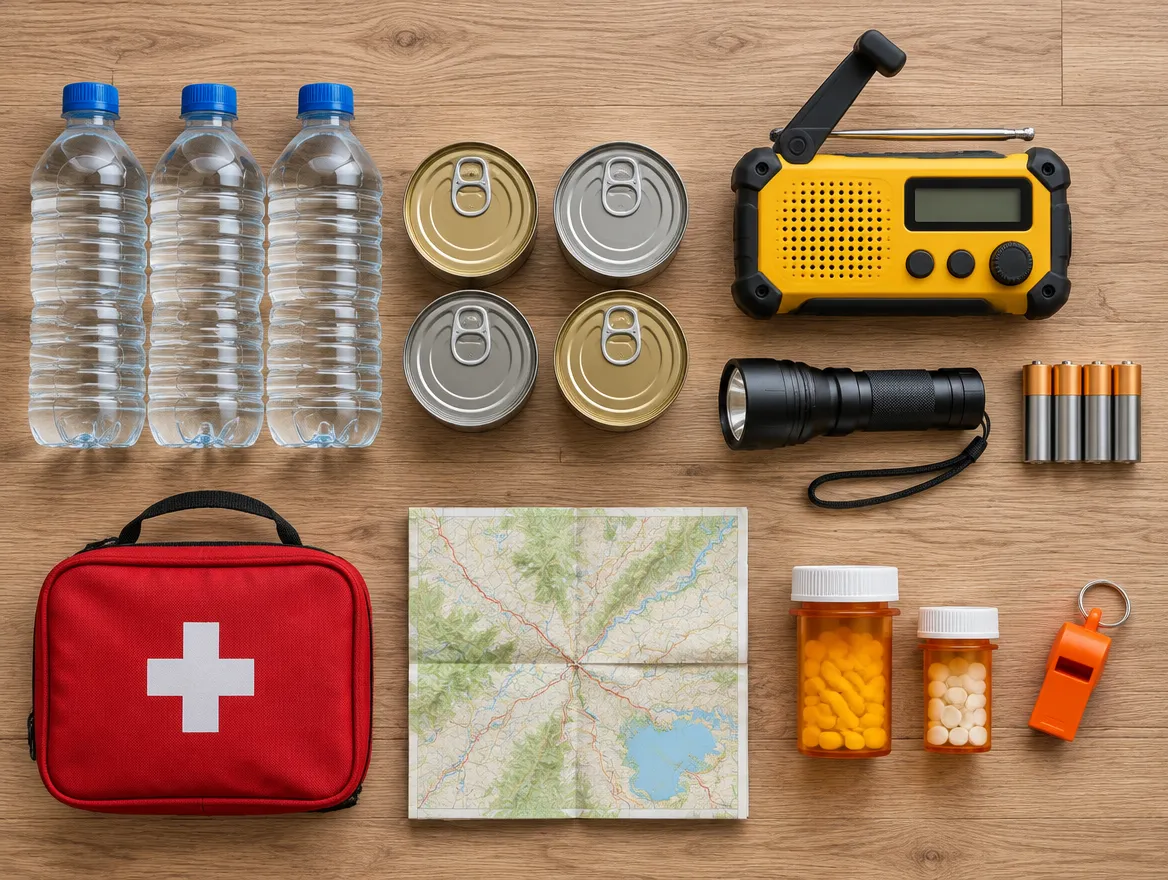
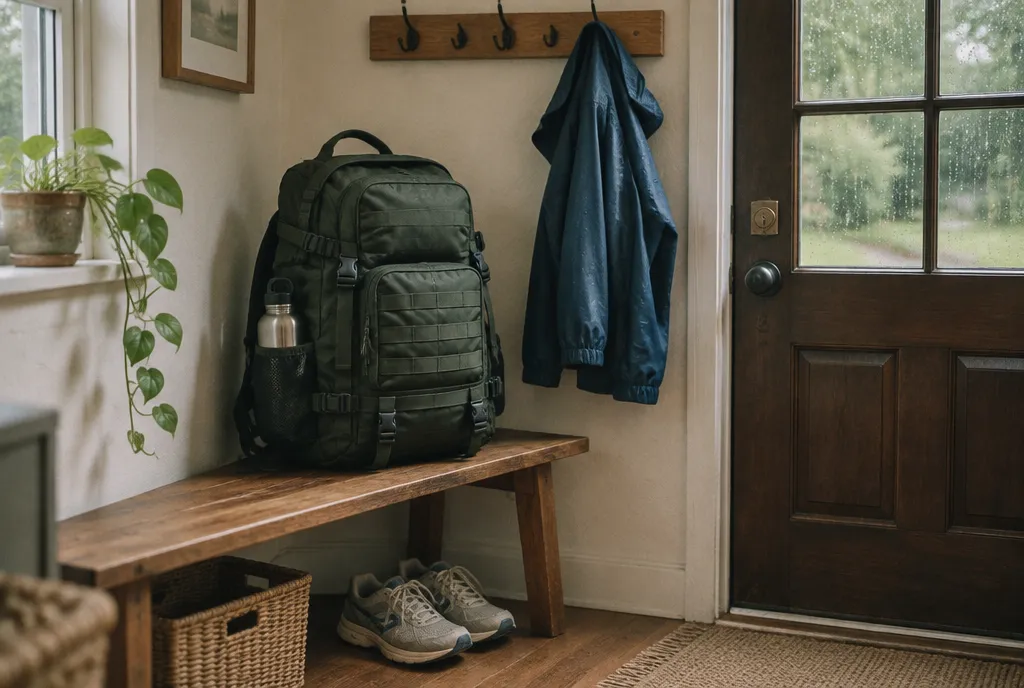
After a strong earthquake, water, power and stores can be out for days. Keep at least 1 gallon of water per person per day for at least 3 days, plus food, a radio, flashlights, a first aid kit, medications and a whistle. Our 72-hour kit checklist covers the full list. If your building is damaged and you have to leave, a go bag by the door saves precious minutes.
Earthquakes add a few items worth keeping close: sturdy shoes, work gloves, a dust mask, and a wrench for the gas.
After the shaking stops
When the shaking stops, take a moment to look around before you move. Then:
- Check for injuries. Help others if you can do so safely.
- Check for hazards. Look for fire, gas smells, broken glass and damaged electrical wiring.
- Get out if the building is damaged. Move away quickly and do not go back in until officials say it is safe.
- If you are trapped, text, bang on a pipe or wall, or use a whistle instead of shouting, which wastes energy and raises dust.
- Near the coast? If you are in a tsunami hazard zone, go inland or to higher ground right after the shaking stops. Do not wait for an official warning.
- Communicate by text. Save calls for emergencies and follow local news and official alerts.
Expect aftershocks
Aftershocks follow the main earthquake, sometimes for days or weeks. Some are strong enough to bring down chimneys or walls that the first quake weakened. Each time you feel one, Drop, Cover, Hold On again. Keep shoes on and stay out of damaged rooms.
Kids may be frightened by aftershocks long after the main event. Talk about what happened, keep routines as normal as you can, and remind them that the drop-and-cover move works every time.
Keep the plan where you can reach it
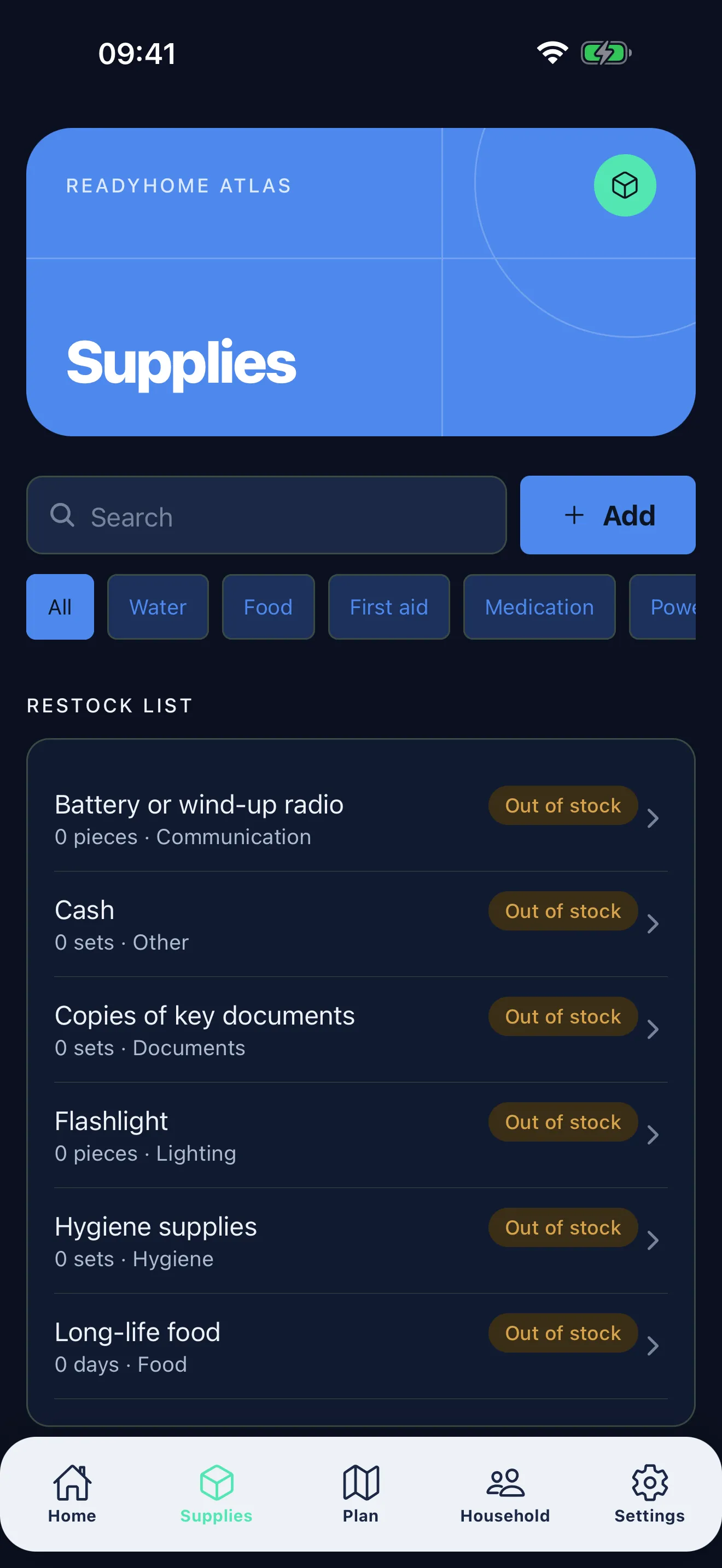
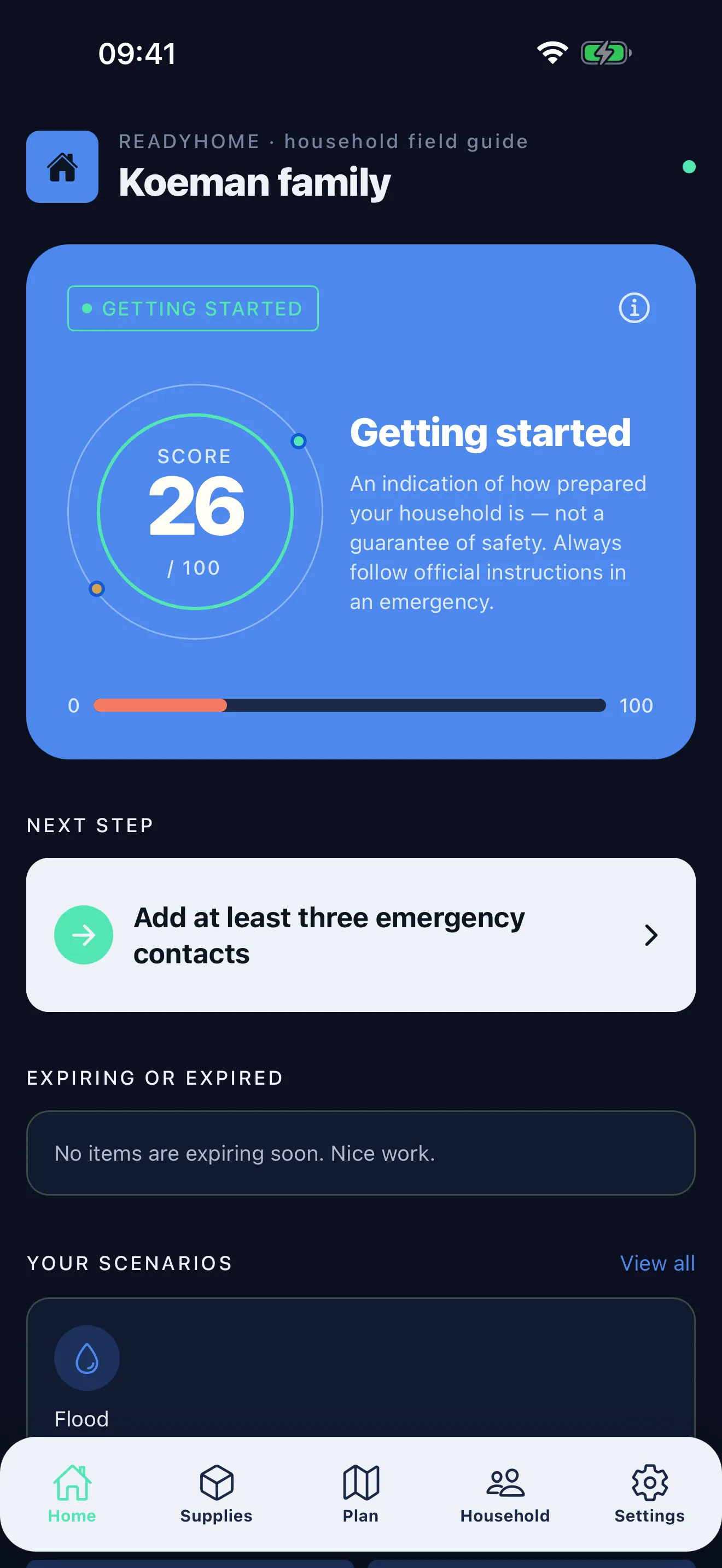
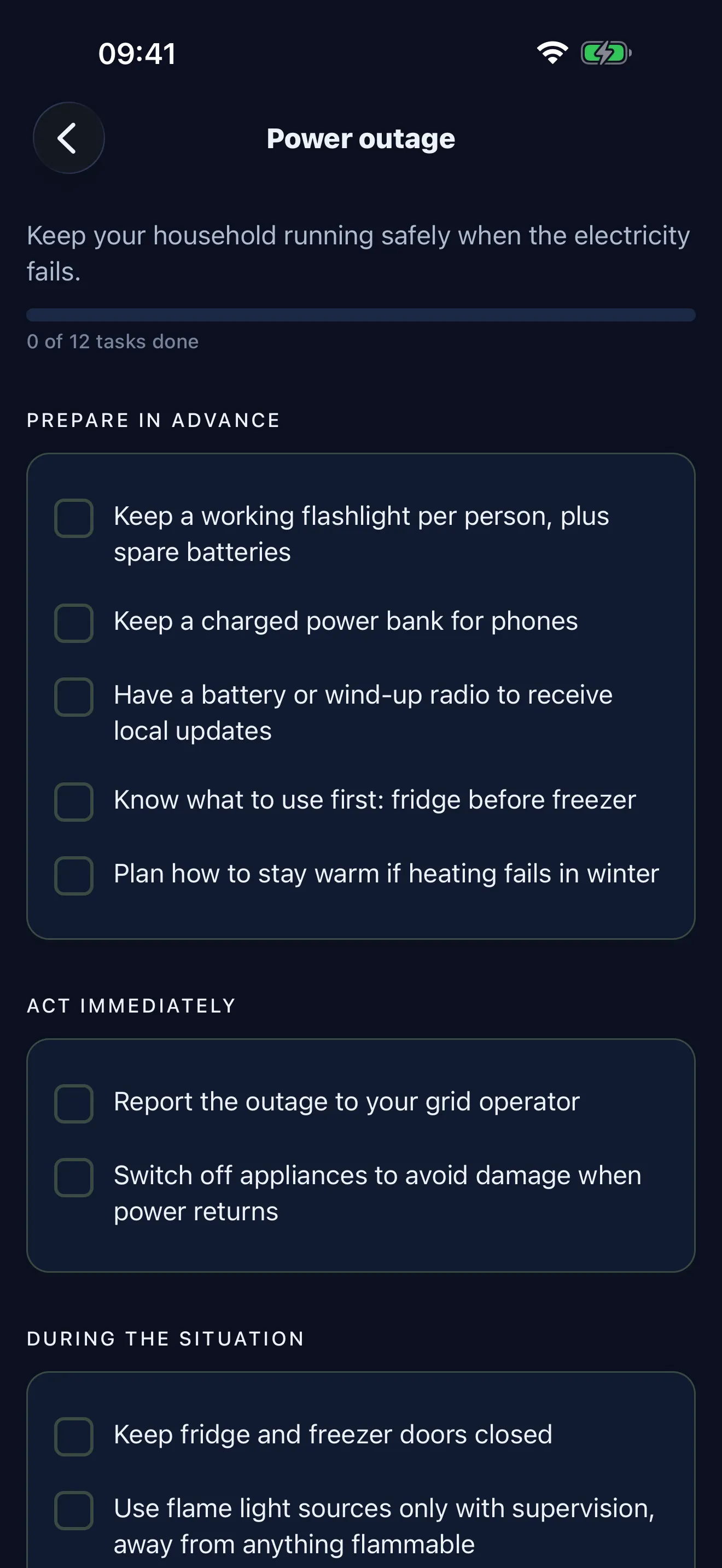
Write down your meeting places, school pickup arrangements, the gas shutoff location and your out-of-area contact, and keep a copy in your kit. The free family emergency plan template puts all of it on one printable page. If you’d rather keep it on your phone, ReadyHome stores your plan and earthquake checklist offline, so it works even when the network does not.
Review the plan twice a year. Check that straps are still tight, swap out expired water and food, and run a quick Drop, Cover, Hold On drill so everyone remembers.
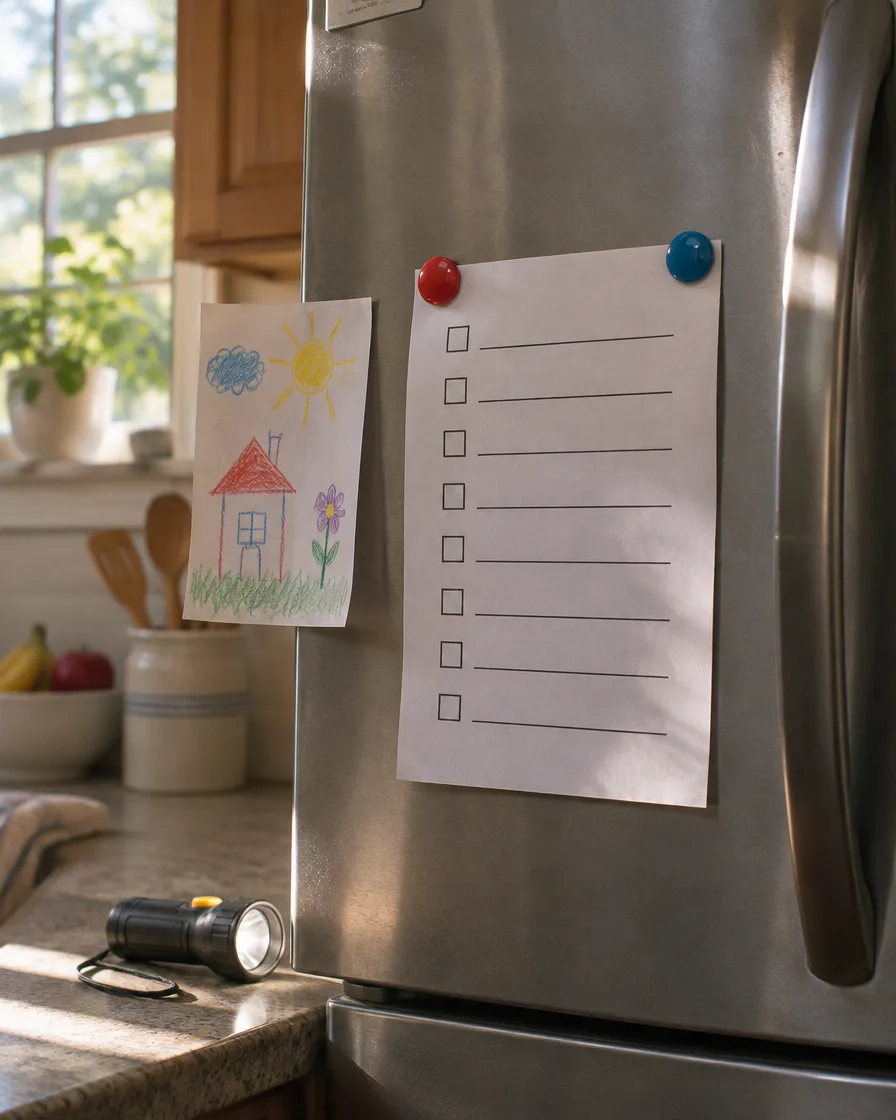
Earthquake emergency plan checklist
Ticks are saved in this browser only.
Sources
- Ready.gov: Earthquakes
- Earthquake Country Alliance: Drop, Cover, and Hold On
- Earthquake Country Alliance: Secure Your Space
- Ready.gov: Safety Skills (shutting off utilities)
- ShakeAlert: Frequently Asked Questions
- American Red Cross: Earthquake Safety
Always follow instructions from your local emergency management office. Call 911 in a life-threatening emergency.