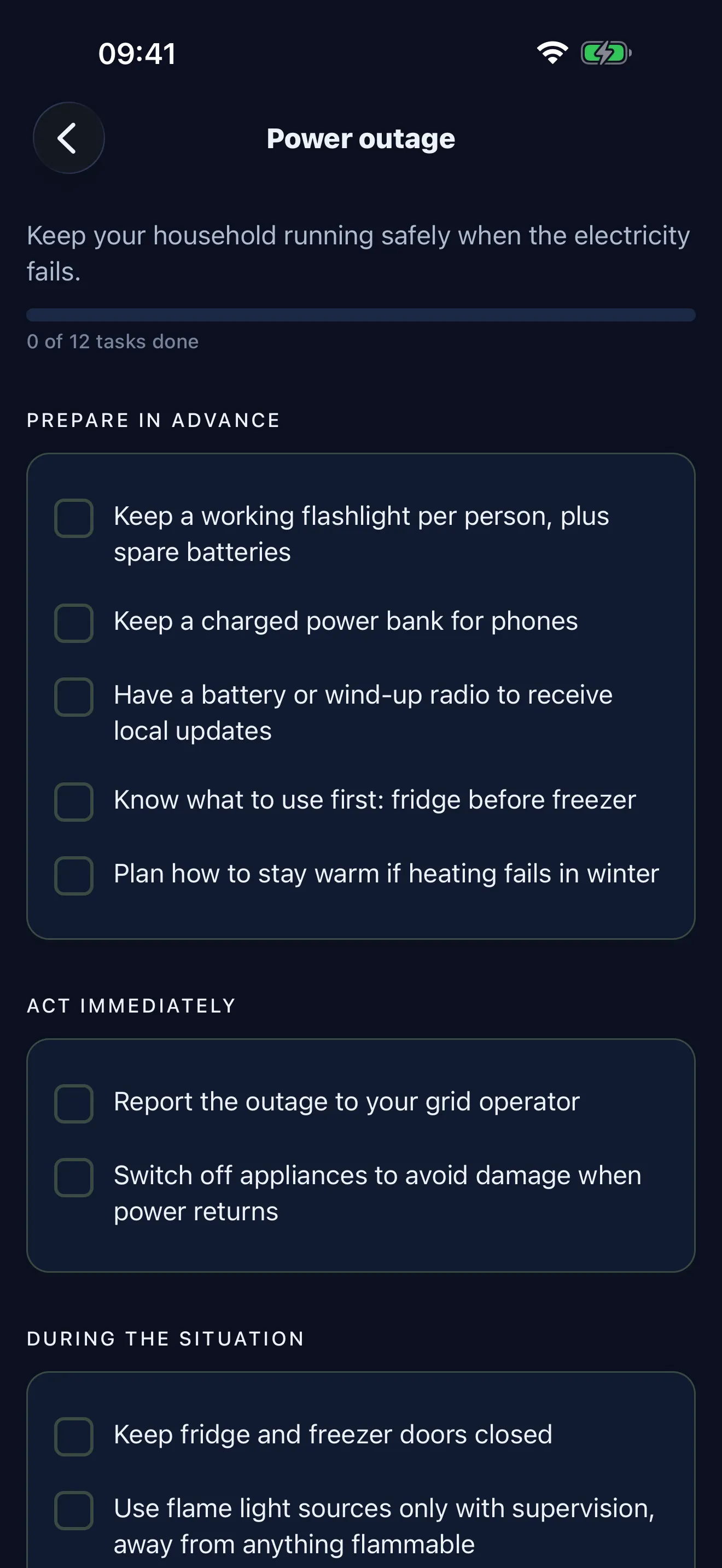
72 Hour Kit Checklist for Families
A 72 hour kit holds 3 days of supplies per person: 1 gallon of water per day, easy food, a flashlight, a radio, first aid, a 7-day supply of medications, documents and cash.
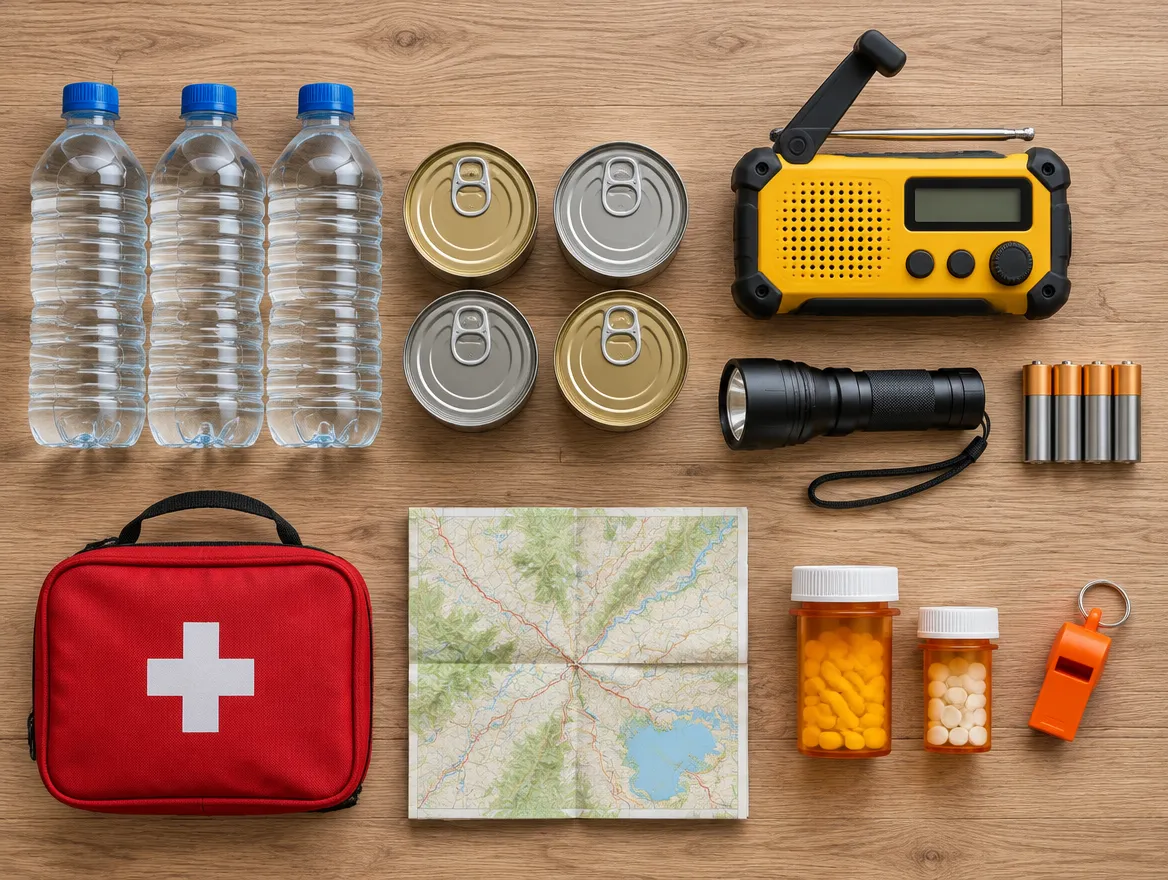
A 72 hour kit holds what each person in your home needs to get through 3 days without power, running water or a trip to the store. The core is simple: 1 gallon of water per person per day, food that needs no cooking, a flashlight, a radio, a first aid kit, a week of medications, copies of key documents and some cash.
This checklist follows the supply lists from Ready.gov and the American Red Cross. It covers what to pack, how much water to store, what to add for kids and pets, and how a 72 hour kit differs from a go bag and a 2-week home supply.
Why 72 hours
The American Red Cross recommends a 3-day supply of water and food for evacuation and a 2-week supply for home. Three days is the minimum: enough to get through the first stretch after a disaster, when stores may be closed, roads blocked and emergency services stretched thin.
Think of a 72 hour kit as your starting point. Once it is done, you can build toward two weeks of supplies at home.
Water: how much per person
Ready.gov and the Red Cross both recommend one gallon of water per person per day, for drinking and sanitation. For 72 hours:
| Household size | Water for 3 days |
|---|---|
| 1 person | 3 gallons |
| 2 people | 6 gallons |
| 4 people | 12 gallons |
| 6 people | 18 gallons |
Ready.gov notes that children, nursing mothers and sick people may need more, and that in very hot temperatures water needs can double. Add extra for pets too.
Storage tips from Ready.gov:
- Buy commercially bottled water and keep it sealed in its original container, in a cool, dark place.
- If you fill your own containers, use food-grade water storage containers, clean and sanitize them first, and replace the water every six months.
- Never ration drinking water unless authorities tell you to. Drink what you need today and look for more tomorrow.
Food
Pack at least 3 days of non-perishable, easy-to-prepare food per person. Good choices need no refrigeration and little or no cooking or water:
- Canned meat, fish, beans, soup and vegetables
- Peanut butter or other nut butters
- Crackers, granola bars and cereal
- Dried fruit, nuts and trail mix
- Shelf-stable milk or juice boxes
- Comfort foods like cookies or hard candy
Pack a manual can opener and utensils. Ready.gov’s kit list includes a manual can opener, which is easy to forget until you are holding a can with no power. Choose foods your family already eats, and plan around allergies and special diets.
Light, power and information
- Flashlights for each person, with extra batteries. Avoid candles, which are a fire risk.
- Radio: Ready.gov recommends a battery-powered or hand-crank radio, plus a NOAA Weather Radio with tone alert. When cell service and power are down, radio is often how official instructions reach you.
- Phone charger and backup battery. Ready.gov lists a cell phone with chargers and a backup battery as part of a basic kit.
- Whistle to signal for help.
First aid and health
- First aid kit with bandages, gauze, tape, antiseptic wipes, gloves and any items your family uses regularly.
- Medications: The Red Cross recommends a 7-day supply of medications and medical items. Talk to your doctor or pharmacist about how to build that reserve safely.
- Medical supplies: glasses or contact lenses, hearing aid batteries, syringes and any other devices someone depends on.
- Dust mask to help filter contaminated air, as Ready.gov recommends.
- Sanitation: moist towelettes, garbage bags and plastic ties for personal sanitation, plus hand sanitizer, soap, toilet paper and feminine supplies.
Documents and cash
The Red Cross recommends copies of personal documents, including a medication list and medical information, proof of address, deed or lease, passports, birth certificates and insurance policies. Add your emergency contact list and family meeting places.
Keep them in a waterproof folder or zip-top bag. Ready.gov’s kit guidance suggests sealing items in airtight plastic bags.
Cash: Ready.gov recommends keeping a small amount of cash at home in small bills, because ATMs and credit cards may not work during a disaster.
Tools and extras
- Wrench or pliers to turn off utilities
- Plastic sheeting, scissors and duct tape for sheltering in place
- Local paper maps
- Extra set of house and car keys
- A change of clothes, a hat and sturdy shoes for each person
- Blankets or sleeping bags if you live somewhere cold
Kids and babies
The Red Cross suggests adding items each family member needs. For children:
- Babies: bottles, formula, baby food and diapers.
- Kids: games, books, coloring supplies and a small comfort item like a stuffed animal.
- Clothing: a change of clothes in the right size. Check sizes at every rotation, because kids outgrow kits fast.
- Contact card: a card with parent phone numbers in each child’s pack.
Let older kids help pack their own kit. It makes the plan feel less scary and helps them remember where things are.
Pets
Ready.gov recommends packing an emergency kit for your pet too. Items to include:
- Several days of food in an airtight, waterproof container
- Several days of water and a bowl
- Any medications your pet takes
- Collar with ID tag, a harness or leash and a backup
- A crate or sturdy carrier
- Litter and a litter box, or waste bags
- Copies of vaccination and registration records
- A photo of you with your pet, in case you are separated
72 hour kit vs go bag vs 2-week home supply
These terms get used interchangeably, but they mean slightly different things. Here is a practical way to think about them:
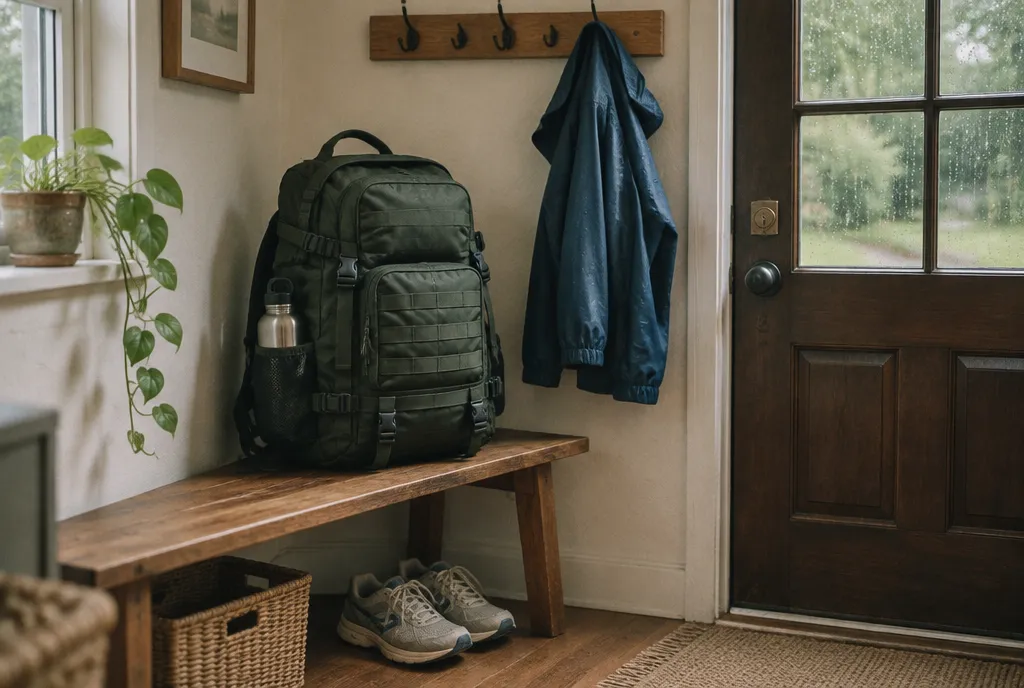
- 72 hour kit: 3 days of supplies for everyone in the household. It can live in bins at home or be split into backpacks.
- Go bag: a portable kit, one per person, ready to grab when you need to leave fast. It holds the 3-day essentials you can carry, plus documents and medications. See our go bag checklist for a carry-sized version.
- 2-week home supply: the Red Cross recommendation for sheltering at home. Two weeks of water and food covers longer events like a major storm or extended power outage.
A simple setup for most families: one go bag per person by the door, plus a larger home supply in the garage, basement or closet that you grow from 3 days to 2 weeks.
Storage and rotation
Ready.gov recommends packing your kit in one or two easy-to-carry containers, such as plastic bins or a duffel bag, and keeping it in a designated spot everyone knows. Ready.gov also suggests keeping supplies at work and in the car.
To keep the kit usable:
- Store canned food in a cool, dry place and boxed food in tightly closed plastic or metal containers.
- Write purchase or expiration dates on items with a marker.
- Check the kit twice a year. Replace expired food, medications and batteries.
- Replace self-filled water every six months.
- Update clothing sizes, medications and documents when your household changes.
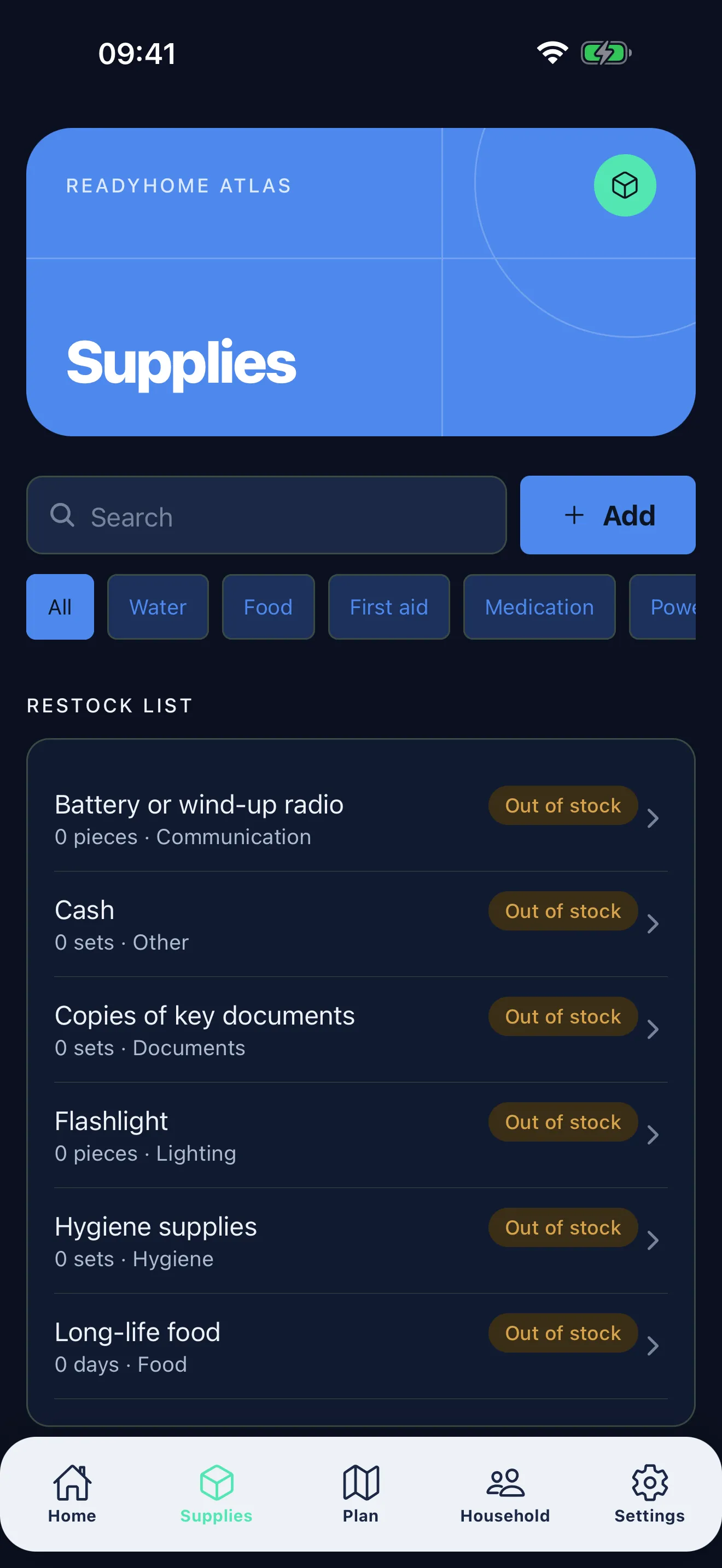
Ready.gov recommends reviewing your needs every year and updating the kit as your household changes. If you would rather not track expiration dates by hand, ReadyHome keeps a list of your supplies offline and reminds you before items expire.
Put it into your plan
A kit only helps if your family knows where it is and when to use it. Record its location in your family emergency plan, assign one person to grab it, and add any hazard-specific items, like those in our hurricane emergency plan, for the emergencies most likely where you live. Always follow instructions from local officials about whether to stay or go.
72 hour kit checklist
Ticks are saved in this browser only.
Sources
- Ready.gov: Build a Kit
- American Red Cross: Survival Kit Supplies
- Ready.gov: Water
- Ready.gov: Prepare Your Pets for Disasters
- Ready.gov: Financial Preparedness
Always follow instructions from your local emergency management office. Call 911 in a life-threatening emergency.